How much does a website cost in 2026?
Development
•
X min
•
Published on
23.08.2026
•
Updated on
23.08.2026
In 2026, a website costs between €3,000 and €50,000 depending on its type and level of finish. A brochure site runs roughly €3,000 to €8,000, an e-commerce site €5,000 to €25,000, and a custom site or web app often exceeds €20,000. The price depends mostly on the scope of the project, not the technology used.
The tricky part, when you request a quote, is that two projects with the same name can carry very different budgets. This article gives the real market ranges, explains what makes them vary, and helps you compare a proposal without getting it wrong.
The budget depends on three things: the type of site, the level of customization, and who builds it (a DIY platform, a freelancer, or an agency). Here are the realistic ranges seen on the market.
| Type of site | Range | For whom | Timeline |
|---|---|---|---|
| Brochure site | €3,000 to €8,000 | very small businesses, SMEs, brands | 3 to 8 weeks |
| E-commerce site | €5,000 to €25,000 | online stores | 6 to 16 weeks |
| Custom site / web app | €20,000 and up | scale-ups, complex projects | 3 months and up |
| Redesign of an existing site | see the dedicated guide | sites to evolve | variable |
These ranges cover design and development. They don't always include copywriting, visuals, translation, or maintenance, which can be added depending on the provider.
Two "brochure site" quotes can range from €3,000 to €8,000 for a scope that looks identical. The factors behind the gap:
A brochure site presents your business across a few pages (home, offer, about, contact). Expect €3,000 to €8,000 for a custom design aligned with your brand. It is the most common format for a very small business, a freelancer, or an SME. To understand what separates one quote from another, see our guide on comparing providers without wasting budget.
An online store adds a catalog, a cart, payment, and often inventory management. Expect €5,000 to €25,000 depending on the number of products, integrations (payment, logistics, CRM), and how customized the checkout is.
As soon as you need specific features, connected areas, or business logic, you are in custom territory. The budget starts around €20,000 and climbs with complexity. This is the space of scale-ups and high-value projects.
Redesigning a live site follows a different logic (content to migrate, SEO to preserve). The budget and method are detailed in our dedicated guide: website redesign cost.
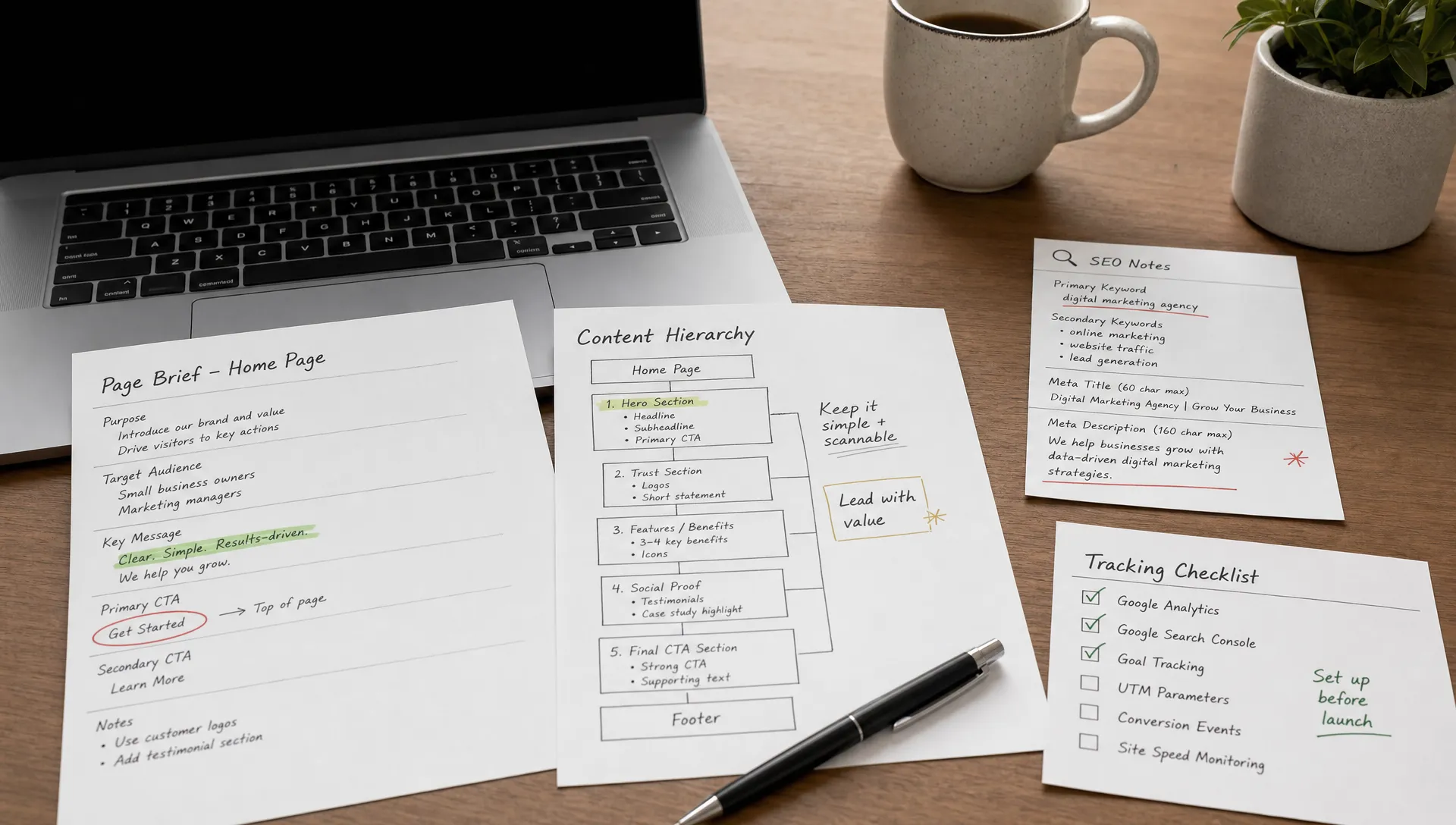
A website budget is not a single line. It bundles several work items, and knowing the split helps you judge whether a quote is realistic rather than just cheap or expensive.
| Component | What it covers | Typical share |
|---|---|---|
| Design | Wireframes, UI, brand-aligned visuals | 25 to 35% |
| Development | Build, responsive, integrations | 30 to 40% |
| Content | Copywriting, photos, translation | 10 to 20% |
| SEO and performance | Structure, speed, on-page SEO | 10 to 20% |
| Project management | Scoping, coordination, revisions | 10 to 15% |
When one of these is missing from a quote, it usually reappears later as an extra cost, so a cheaper proposal is not always cheaper in the end.
The build is a one-off cost, but a website also has running costs to keep it online, fast and secure. Budget for both from the start.
| Item | Type | Typical cost |
|---|---|---|
| Domain name | Recurring, yearly | €10 to €20 / year |
| Hosting | Recurring | €0 to €50 / month by platform |
| SSL certificate | Usually included | often free |
| CMS or platform subscription | Recurring | varies by platform |
| Maintenance and updates | Recurring | see our maintenance guide |
| Ongoing SEO and content | Optional, recurring | project-based |
On a platform like Webflow the subscription is part of these recurring costs, detailed in our Webflow pricing 2026 guide.
For the same scope, the price varies depending on who builds the site.
The cost of the tool matters too. On Webflow, for example, the subscription adds to the design cost: the details are in our Webflow pricing 2026 guide.
A clear quote should define the scope, not just a price. Check:
A low price that details nothing often costs more in the end, in updates and rework.
You can lower a website budget without ending up with a weak site, as long as you cut the right things.
Trimming the scope is smart; cutting SEO, performance or mobile quality usually costs more later.
The right budget is not the lowest one, it is the one that serves your goal. A credibility brochure site does not need the budget of a site meant to generate leads or sell online. If your site is an acquisition channel, investing in SEO, performance, and a real content strategy pays off quickly. After launch, also plan a maintenance budget to keep the site up to date and secure.
Have a project and want a clear quote? Let's talk about your site.