
Customer journey: plainly explained.

The customer journey maps every touchpoint from awareness to purchase and loyalty. Learn its stages, how to map it and how it improves conversion.

Consulting · Updated Nov 7, 2026

DEFINITION

A customer journey is the full sequence of steps and touchpoints a person goes through, from first awareness of a brand to purchase and beyond.

CATEGORY

Consulting

RELATED

Conversion funnel, Buyer persona

Summarize this page with AI

A customer journey is the complete path a person follows with a brand, from the first moment they become aware of a need to the purchase and the relationship afterwards. It covers every touchpoint: search results, social posts, the website, emails, sales calls, onboarding and support.

It matters because customers rarely buy after a single interaction. Seeing the whole path shows where prospects hesitate, where they drop out and which moments deserve more effort. It shifts the focus from isolated channels to the experience as a whole.

01

The main stages

  • Awareness: the person discovers a problem or finds your brand.
  • Consideration: they compare options, read content and look for proof.
  • Decision: they choose, often after a demo, a quote or a trial.
  • Retention: onboarding, support and results keep them satisfied.
  • Advocacy: happy customers renew, refer and leave reviews.
02

How to map a customer journey

  1. Choose a persona and a goal: map one buyer persona and one outcome, such as booking a call.
  2. List the touchpoints: include every channel, online and offline.
  3. Add what the customer thinks and feels: questions, doubts and motivations at each stage.
  4. Back it with data: analytics, session recordings, surveys and sales feedback.
  5. Find friction and gaps: mark the moments where people leave or wait.
  6. Prioritise fixes: pick improvements by impact and effort.
03

Customer journey vs conversion funnel vs user flow

Aspect
ScopeCustomer journeyAll touchpoints, before and after purchaseConversion funnelSteps leading to one conversionUser flowScreens inside one product or site
ViewpointCustomer journeyThe customer's experienceConversion funnelThe business's metricsUser flowThe interface
Typical useCustomer journeyStrategy and alignment of teamsConversion funnelMeasuring drop-offUser flowDesigning task completion
04

Common mistakes

Typical errors are mapping an ideal path instead of the real one, ignoring post-purchase stages, building the map from internal opinions without customer data, and leaving it in a slide deck that nobody updates. Treat the map as a working document and revisit it as behaviour changes.

05

Customer journey at BeBranded

We map journeys from real data and interviews, then turn the findings into a concrete roadmap for your site, content and sales process. This is part of our consulting service, so every improvement is tied to a measurable result.

FAQ

Questions about Customer journey.

Another question?

Write to us
What is a customer journey?
It is the full sequence of interactions a person has with a brand, from first awareness to purchase and the relationship that follows.
What are the stages of a customer journey?
Commonly awareness, consideration, decision, retention and advocacy, though the names vary by business.
What is the difference between a customer journey and a conversion funnel?
The journey describes the customer's whole experience. The funnel counts how many people move through the steps toward one conversion.
How do I create a customer journey map?
Pick a persona and goal, list touchpoints, note what the customer thinks at each stage, add real data and mark friction points.
Which data should feed a journey map?
Web analytics, session recordings, CRM records, surveys, interviews and feedback from sales and support teams.
How often should a journey map be updated?
Review it at least once a year, and after major changes to your offer, channels or website.

Related

Related terms, and where to go next.

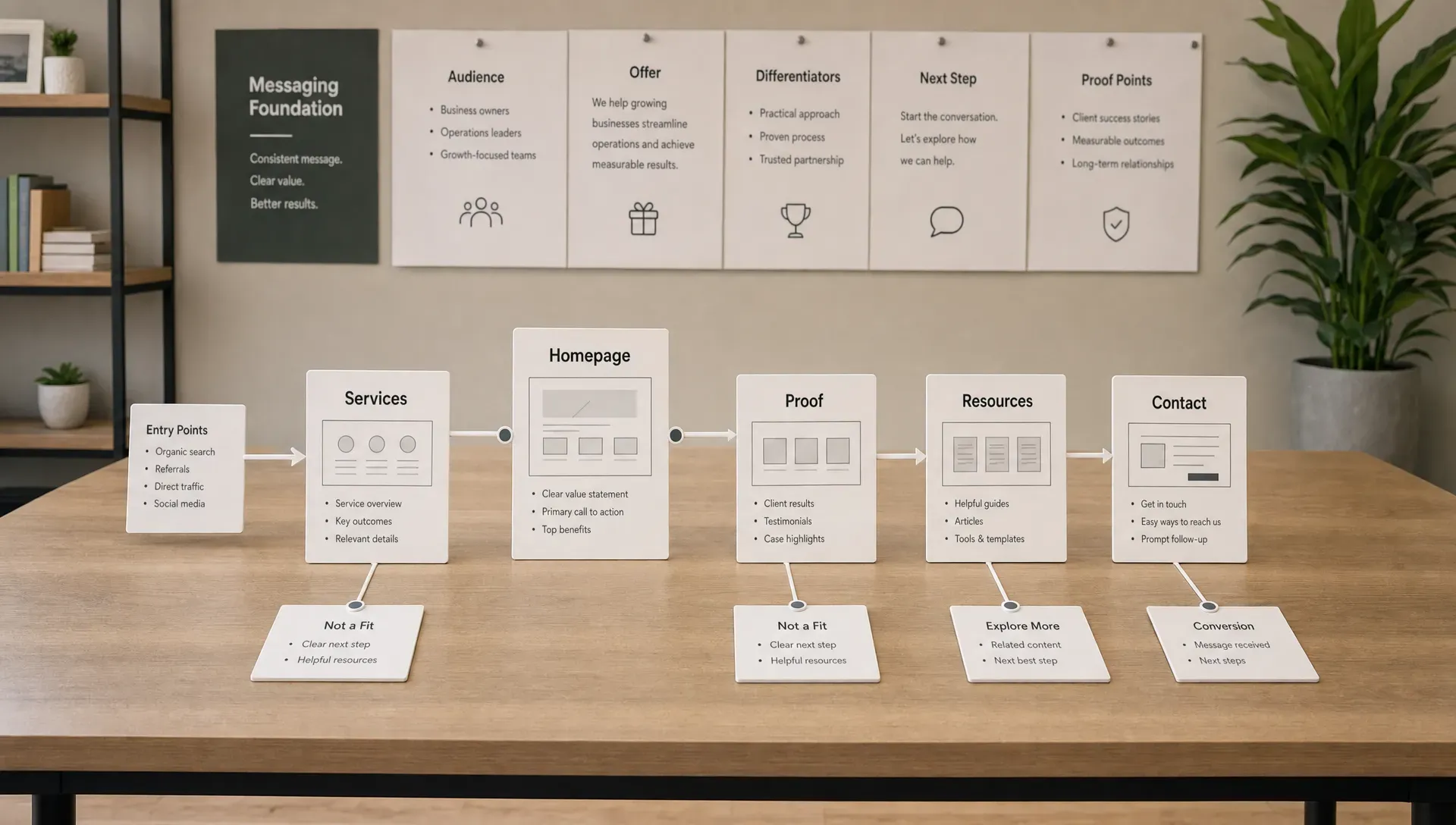
What a professional website for business should include
Development

What a professional website for business should include

Learn what a professional website for business should include: clear messaging, UX, SEO, conversion paths, CMS, and a launch checklist.

Read the article
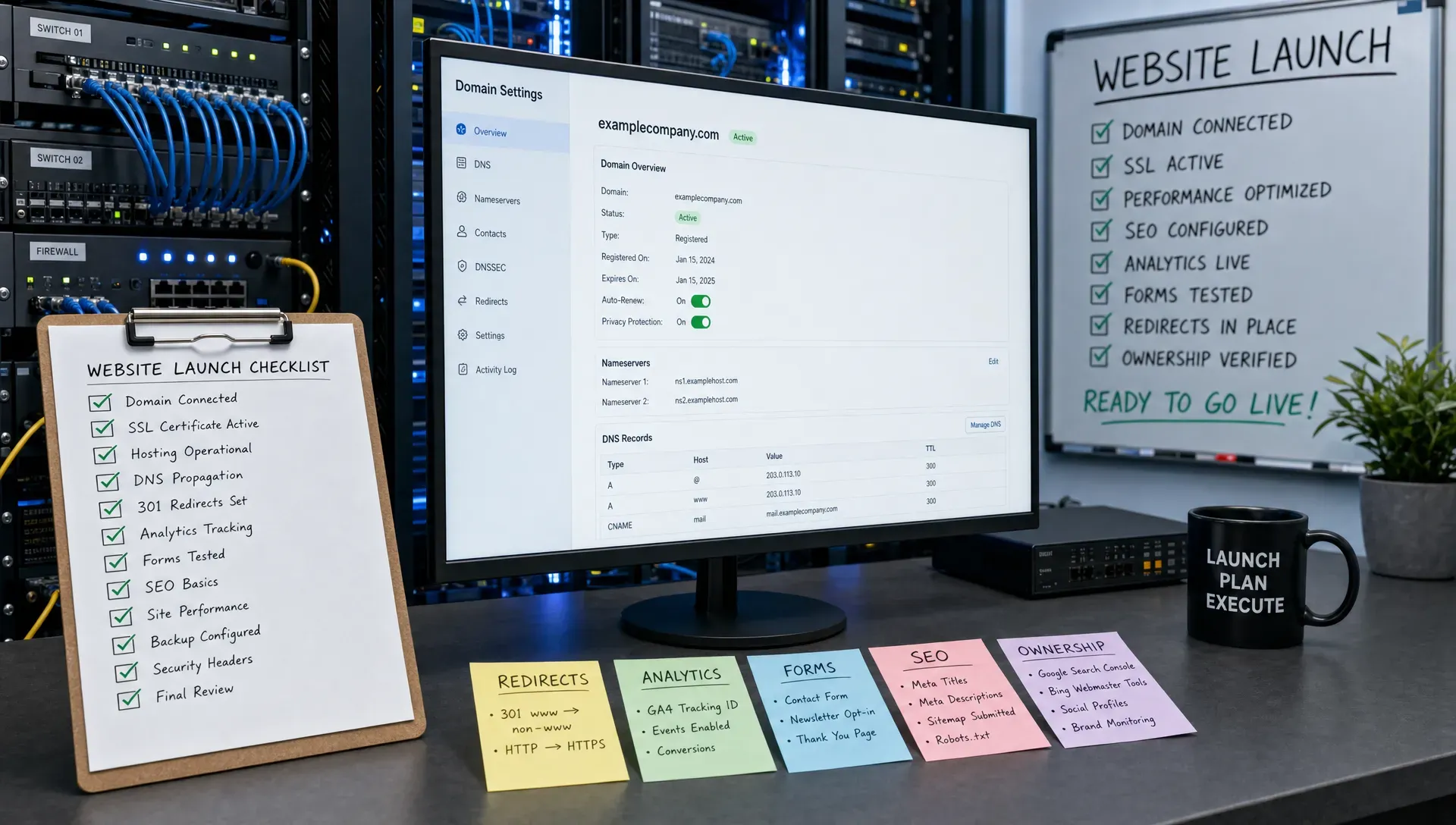
Setting up a website: the checklist before you launch
Development

Setting up a website: the checklist before you launch

Setting up a website? Use this launch checklist to verify strategy, content, SEO, tracking, QA, and maintenance before going live.

Read the article
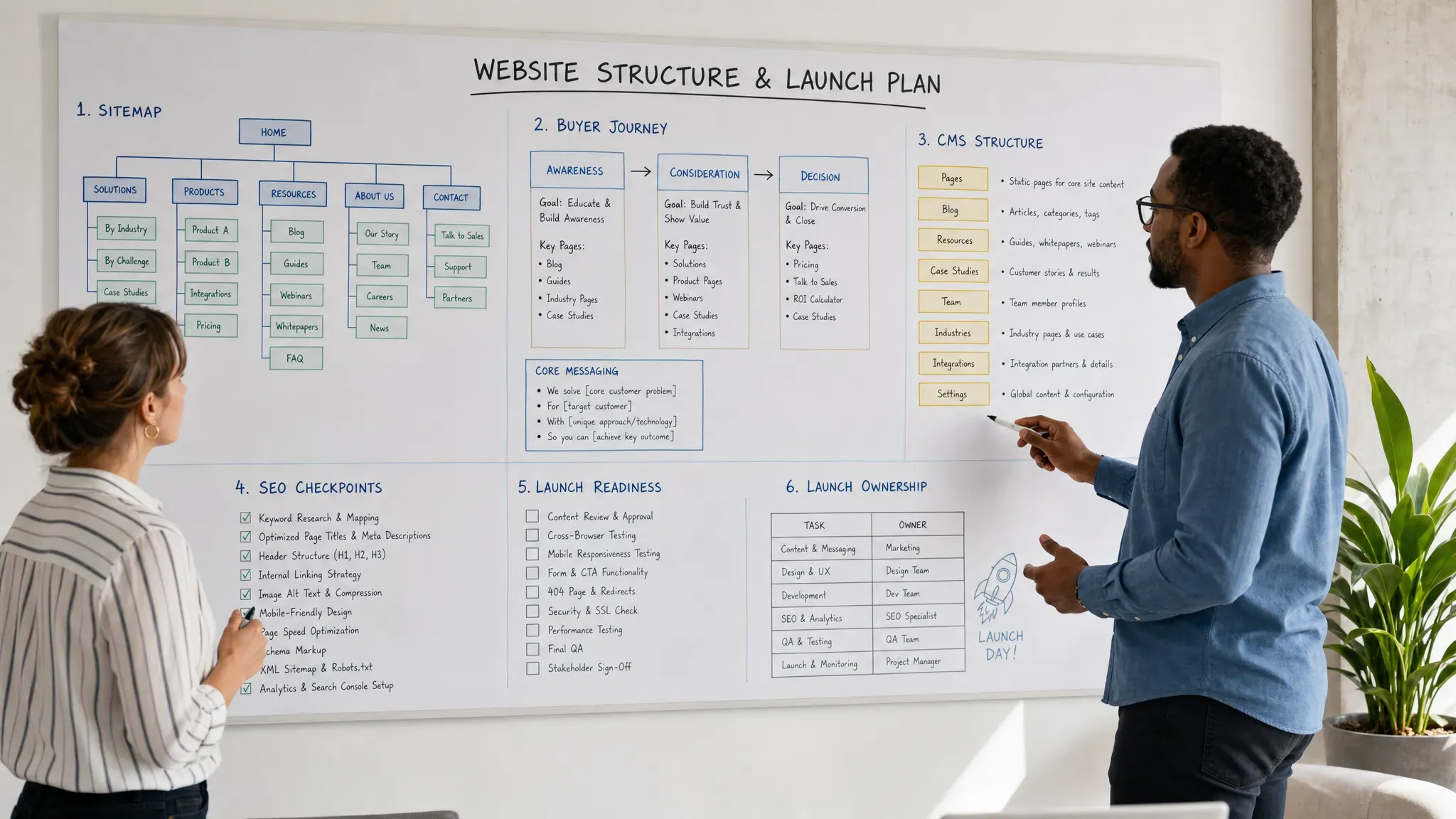
Website design and development: what growing teams should prioritize
Development

Website design and development: what growing teams should prioritize

Website design and development priorities for growing teams: strategy, CMS, SEO, conversion, integrations, and launch-ready execution.

Read the article

Let’s talk

Tell us what you want to build.

Thirty minutes with the people who will work on your project. You leave with a clear view of the scope, the timeline and the next steps.

What happens next

  1. 1A 30-minute callWe listen to your goals, your constraints and your context.
  2. 2A clear scopeWe map what is worth doing first, and what it takes.
  3. 3A costed proposalYou decide, with no commitment and no sales pitch.