Website maintenance: pricing, types and how to choose (2026)
Development
•
X min
•
Published on
20.02.2026
•
Updated on
02.08.2026
Everyone sells "maintenance." But nobody sells the same thing.
One agency charges 80 euros a month to "keep your site up to date." Another charges 2,000 euros a month for "ongoing support." Both call it maintenance. And both are technically right, because the word means almost nothing without a defined scope.
This article explains what website maintenance actually covers, the price ranges by type of service, and how to choose a plan that matches what you actually need. Not what you're being sold.
There are three types of maintenance (micro-support, technical, growth). Prices range from 50 euros/month to over 3,000 euros/month. The price difference reflects a difference in scope, not quality. Comparing rates without comparing what's included is the first mistake to avoid.
The term "maintenance" is used as a catch-all for everything that happens after a website goes live. Whether it's changing a phone number, fixing a critical bug, or building 10 new landing pages, it all ends up in the same bucket.
This ambiguity works in many providers' favor. It allows them to sell a monthly retainer without ever specifying what it includes. And it prevents clients from comparing offers, because they're comparing labels, not scopes.
On the client side, the same situation comes up frequently. The company has been paying a monthly retainer for a year. They don't know exactly what they're getting in return. Requests take time. And when they ask for something concrete (a new page, a structural change), they're told it's "outside the scope."
The problem isn't the price. It's the lack of a clearly defined scope. A retainer without a written scope is a subscription to ambiguity.
To see things clearly, you need to distinguish three levels of maintenance. They don't address the same needs, don't require the same skills, and don't cost the same.
This is the most basic layer. It covers simple modifications the client can't (or doesn't want to) make themselves: updating text, replacing an image, changing a price, fixing a typo, editing a link.
This type of maintenance is often what clients picture when they hear "maintenance." In reality, on a well-built site (Webflow, Framer, or any modern CMS), most of these changes can be made directly by the client through the visual editor.
A good provider doesn't charge for 5 minutes of work to change a line of text. This kind of micro-fix is part of the normal relationship between an agency and its client. What should be billed is structured time, not minor adjustments.
This is maintenance in the IT sense. It ensures the site works, stays secure, and remains performant over time.
It typically covers the following: technical updates (CMS, plugins, dependencies), uptime monitoring, bug fixes, regular backups, SSL certificate management, performance tracking (load times, Core Web Vitals), and incident response.
This is an essential service, but it doesn't move the site forward. It keeps it running. On WordPress, this layer is heavy (frequent updates, plugins to manage, vulnerabilities to monitor). On Webflow or Framer, it's much lighter since hosting, security, and updates are handled by the platform.
This is the layer that creates value. It doesn't just keep the site alive: it evolves it continuously, based on data and business goals.
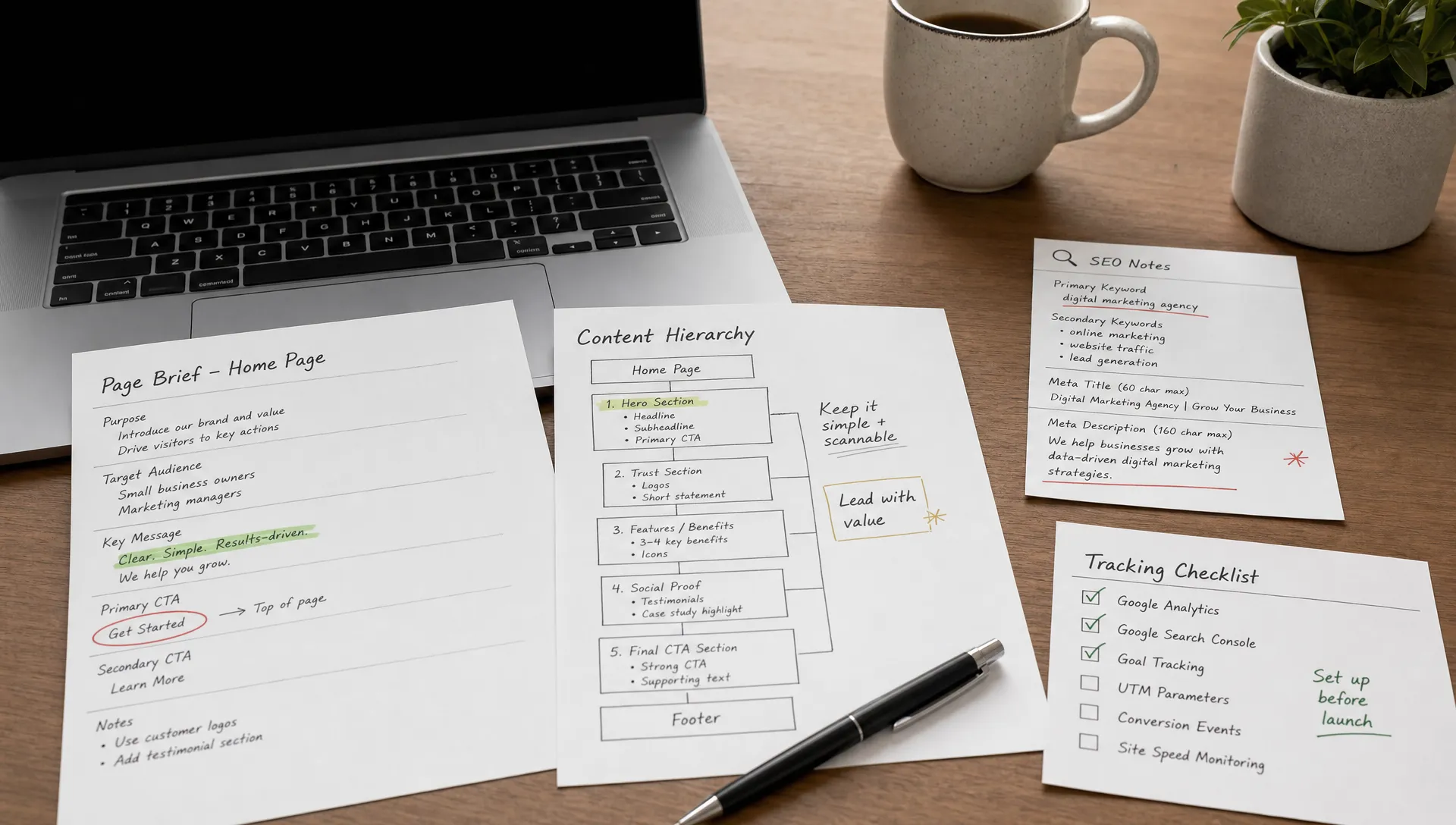
It includes creating new pages or sections, optimizing existing pages for SEO, working on conversion (CRO) with testing and iteration, setting up and monitoring tracking (analytics, events, funnels), improving design and UX based on user feedback, and integrating new tools or content.
This type of maintenance requires skills in design, development, SEO, and analytics. It's not support: it's product iteration applied to the website. And it's what drives the biggest price differences.
Prices vary enormously because they reflect different scopes. Here are the ranges observed on the French market, by type of maintenance.
| Maintenance Type | Price Range | Billing Model | What's Included |
|---|---|---|---|
| Micro-support | $0 – $200/mo | Hourly retainer, pay-as-you-go, or included in the relationship | Text, image, and link changes, simple content updates |
| Technical (run) | $100 – $500/mo | Monthly retainer with SLA | Updates, security, monitoring, backups, bug fixes, performance |
| Growth (iteration) | $1,000 – $4,000+/mo | Day-based retainer (typically 2 to 4 days/month) | New pages, SEO, CRO, design, tracking, content creation, testing |
A few benchmarks to help interpret these numbers.
A retainer under $100/month generally covers basic micro-support. That's enough if your site doesn't change and you handle content updates yourself. If you're promised more than that at this price, ask questions.
A retainer between $200 and $500/month typically covers technical maintenance. It makes sense for a WordPress site with plugins to manage, less so for a Webflow site where the infrastructure is handled by the platform.
Above $1,000/month, you're in growth maintenance territory. This isn't support anymore: it's ongoing work involving a designer, a developer, sometimes an SEO specialist. The price is justified by the volume of work and the business impact.
The price of a maintenance retainer depends on five main factors: the technical complexity of the site (number of pages, integrations, CMS, languages), the volume of changes per month, the SLA level (guaranteed response time: 24h, 48h, 72h), the skills involved (dev only vs dev + design + SEO), and the billing model (hours, days, flat fee).
To cut through the ambiguity, here's a concrete grid of what's generally included (or not) in a maintenance retainer. This table lets you read between the lines of a proposal.
| Service | Micro-support | Technical (run) | Growth (iteration) |
|---|---|---|---|
| Text / image changes | Yes | Sometimes | Yes (often not billed if quick) |
| CMS / plugin updates | No | Yes | Yes |
| Monitoring / uptime | No | Yes | Yes |
| Bug fixes | No | Yes (within SLA) | Yes |
| Backups | No | Yes | Yes |
| New page creation | No | No | Yes |
| SEO optimization | No | No | Yes |
| Design / UX iteration | No | No | Yes |
| Tracking / analytics | No | Rarely | Yes |
| CRO / conversion testing | No | No | Yes |
This table highlights an essential point: the most visible tasks (changing text, fixing a bug) are rarely what costs the most. What drives the price up is the iteration work that moves the site toward better performance.
Most misunderstandings about maintenance don't come from what's included. They come from what's not, and what nobody bothered to spell out.
Some services are almost always outside the retainer but rarely mentioned clearly in contracts. The most frequent ones: partial or full site redesign, custom development (new features, API integrations), CMS migrations, content writing (copy, blog posts, product descriptions), visual or illustration creation, and advertising campaigns or media buying.
Before signing a retainer, make sure the document specifies: the exact list of services included, the allocated volume (hours or days per month), the response time commitment (SLA) for critical bugs and standard requests, the request process (ticket, email, Slack, dedicated tool), and the rollover terms if the allocated volume isn't used within the month.
If these elements aren't in the proposal, ask for them. A serious provider has no reason to refuse putting them in writing.
The first question isn't "how much does it cost" but "what do I expect from my site over the next 6 to 12 months."
If your site is stable, the content doesn't change often, and you have no immediate growth goals, a light technical retainer (or no retainer at all on Webflow) is enough.
If your site is an acquisition channel (SEO, landing pages, content), and you need to evolve it regularly to improve performance, you need a growth retainer. That's not maintenance: it's iteration.
Before signing with a provider, run through these points.
Certain signals in a proposal or sales conversation should prompt additional questions.
"All-inclusive maintenance": if everything is included, nothing is defined. Ask for the exact list of services.
No SLA: if the provider doesn't commit to any response time, you have no guarantee when something breaks.
Hourly retainer with no process: a retainer of "2 hours per month" with no explanation of how to use them (which tool, what timeline, what type of request) is hard to consume.
"Everything is done within 24 hours": very short turnaround times with no distinction between emergencies and standard requests are usually sales promises, not operational commitments.
No visibility on time spent: if you don't know how much time is consumed each month and on what, you can't evaluate the retainer's value.
On a Webflow site, a large portion of traditional technical maintenance simply doesn't exist. The platform handles hosting, updates, SSL certificates, backups, and security. There are no plugins to update, no server to monitor, no PHP vulnerabilities to patch.
The direct consequence: selling a "technical maintenance" retainer on Webflow at the same price as a WordPress retainer doesn't make sense. The volume of recurring technical work is far lower.
On a platform like Webflow, the real value of an ongoing engagement isn't the technical run. It's the iteration.
Creating new landing pages for campaigns. Adding sections to existing pages. Optimizing tags and content for SEO. Setting up clean tracking (GA4, events, conversions). Testing page variations to improve conversion. Integrating new tools (CRM, email marketing, chat). Improving design based on real data.
This is the kind of work that makes the difference between a static site and one that generates results. And that's why a day-based retainer (2 or 4 days per month, typically) is more appropriate than an hourly retainer: it allows you to tackle work that has real impact, not just micro-tasks.
Two offers, same label, completely different outcomes.
Offer A: 2 hours of support per month, $150. The client sends text/image change requests. The provider executes. The site doesn't move.
Offer B: 2 days of iteration per month, $1,800. The provider creates new pages, optimizes SEO, sets up tracking, tests variations, improves design. The site evolves every month.
Both offers are called "maintenance." But one maintains the status quo, the other moves the site forward. Comparing their prices without comparing their impact makes no sense.
This is the most common mistake. Two "maintenance" quotes can show $150 and $2,500 per month. If you compare prices only, you'll pick the cheaper one. But if one includes micro-support and the other includes full iteration (design + dev + SEO + tracking), the comparison is meaningless.
Before comparing prices, align the scopes. List what you actually need, then ask each provider to respond on that basis.
On Webflow, Framer, or any managed platform, most technical maintenance is handled by the platform itself. Paying $300 a month for "updates and backups" on Webflow means paying for a service the platform already provides.
Ask the question: "What technical tasks do you actually perform on my site each month?" If the answer is vague, the retainer probably isn't justified.
A verbal agreement or a quick email isn't enough. Without a document listing the services included, the exclusions, the SLA, and the process, you're in a gray area. And gray areas always end up creating frustration, on both sides.
Many companies think that once the site is delivered, all that's left is to "maintain" it. In reality, a website is a living product. The best-performing pages are the ones that have been tested, adjusted, and optimized over time. If your site is an acquisition channel, budget for iteration, not just maintenance.
Before signing, make sure you can check each of these points.
Website maintenance isn't a standard product with a fixed price. It's a service whose value depends entirely on what it contains.
Before choosing a provider or a retainer, clarify what you need. If your site is a simple brochure that never changes, a light retainer (or no retainer at all) may be enough. If your site is an acquisition channel and you want it to improve, invest in iteration, not basic support.
In every case, require a written scope, a clear SLA, and a formalized request process. That's the foundation of a healthy relationship with your provider.
If you're looking for an engagement that goes beyond technical support and genuinely moves your site forward, you can book a call with our Webflow agency to discuss it.