
The essentials · 30-second read
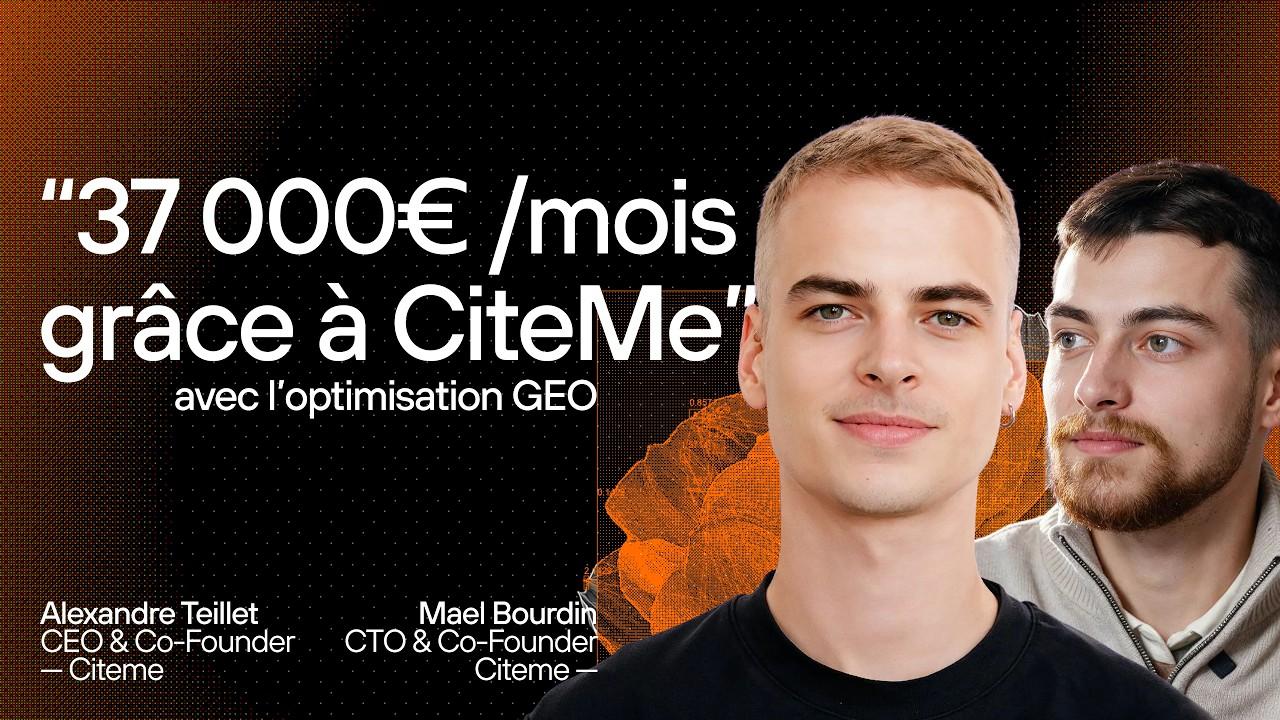
Alexandre Teillet and Maël Bourdin (CiteMe) argue that AI visibility has to be measured on purpose, because it leaves no trace in Search Console.
- In an AI answer there is no tenth place: a brand is cited or absent, and a citation without a click does not show up in Search Console.
- Five things to track: the prompts your customers ask, the competitors cited, the sentiment of the answers, AI crawler access and AI traffic.
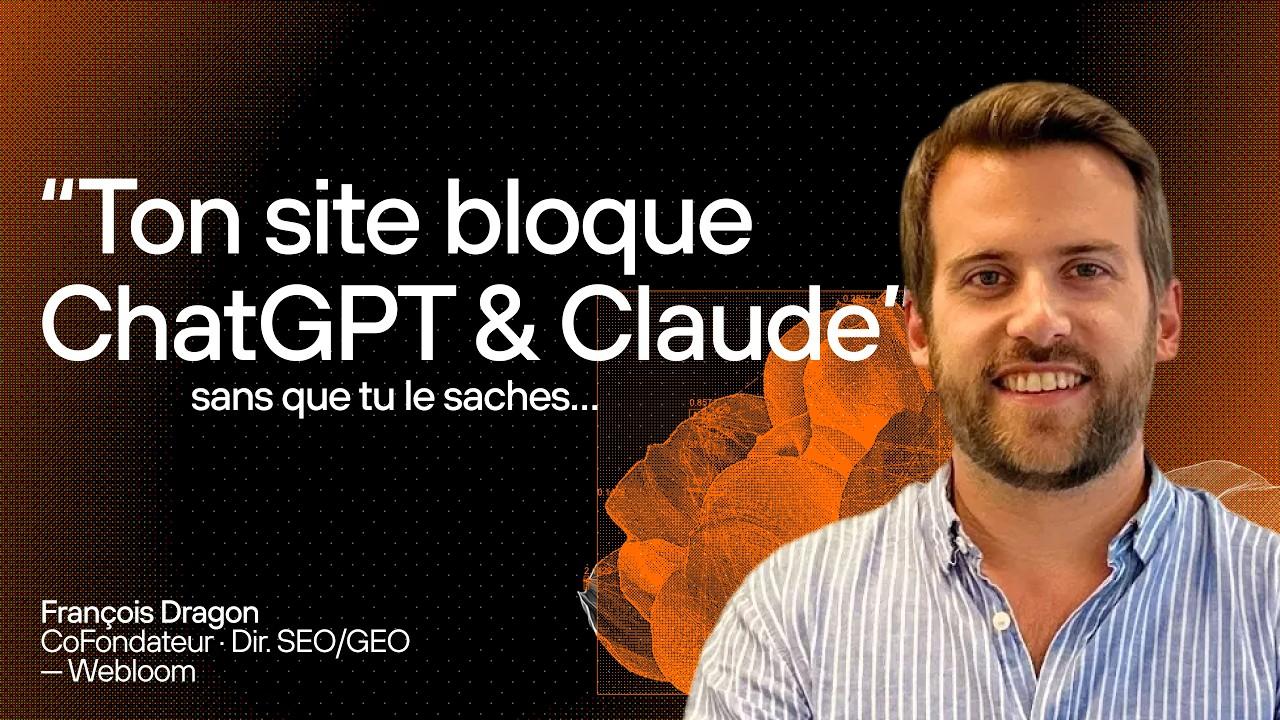
- According to a robots.txt census shown on the slides, 19.3% of the world's top 5,000 sites block GPTBot, often without knowing it.
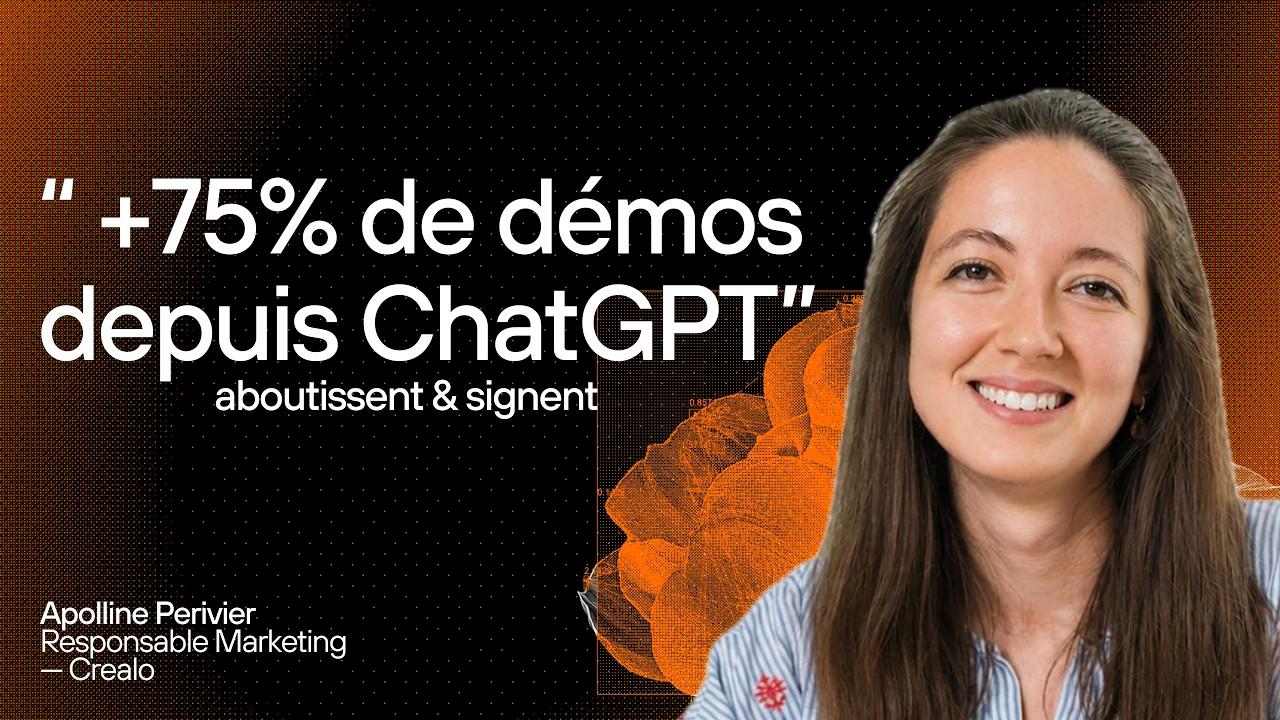
- A manual follow-up is possible: Crealo asked the same question to four engines every month and logged the answers.
- CiteMe, the speakers' own platform, automates the audit, the competitor view, crawler logs and the link with CRM revenue.
Summarize this article with AI
To track your brand in AI search, you need to ask the engines the questions your customers ask, on a regular basis, and keep a record of the answers: who is cited, in what position, and in what terms. That is the core message of Alexandre Teillet and Maël Bourdin, from CiteMe, at The Shift 01: according to them, a citation that brings no click leaves no trace in your usual tools, so you have to measure it on purpose.
Their talk, given on 14 September 2026 at The Shift, our SEO and GEO event, lasts about fourteen minutes. It explains why search has changed shape, what to monitor, and how their platform does it. This article sums up the method and adds a manual alternative for teams that are not ready to use a tool.
Why measure: the list has become an answer
According to the speakers, the search gesture has changed. Yesterday, users typed a keyword and chose among ten blue links. The click was the reward, and it could be measured. Today, they ask a question and get a written answer, with two or three brands cited and sometimes a clickable source. As their slides put it, in an answer there is no tenth place: you are cited, or you do not exist.
They illustrate the point with a shop in Chinatown, New York, that printed a ChatGPT screenshot naming it as the best place for mochi donuts in the city, and placed it in front of its door. Not its menu, not its prices, not its Google reviews. In their words, nobody checks: the model said it, so it is true.
The figures shown on their slides, each with its source:
- 1 billion weekly active users on ChatGPT, against 400 million a year earlier (OpenAI, 6 August 2026).
- 8% organic click rate when an AI Overview is displayed, against 15% without one. The links inside the AI Overview are clicked in 1% of cases (Pew Research Center, 69,000 searches by 900 users, July 2025).
- +117% visits sent by AI to websites in one year, 770 million per month on average (Similarweb, June 2025 to May 2026).
- 19.3% of the world's top 5,000 sites block GPTBot in their robots.txt, often without knowing it (robots.txt census of the top 5,000, September 2026).
Their conclusion: traffic does not disappear, it changes its entry door. And one door in five is locked from the inside.
The speakers list nine surfaces that now answer in Google's place: ChatGPT, Claude, Gemini, Perplexity, Grok, DeepSeek, Meta AI, Mistral and Google's AI Overviews. For most brands, they say, the last one counts more than all the others combined, because customers see it without looking for it, above the classic results. If the term is new to you, our GEO glossary entry explains Generative Engine Optimization.
The problem: three blind spots
CiteMe's slides describe the problem in three points.
- You do not know what AI says about you. The only method available is to type the question by hand, one engine at a time, with no history and no proof.
- None of it shows up in Search Console. A citation without a click leaves no trace. According to the speakers, you can lose ground for six months without a single indicator moving.
- Many sites block AI crawlers without knowing it. An inherited line in robots.txt is enough to shut out GPTBot or ClaudeBot. A blocked crawler means zero possible citations, whatever the quality of the content.
Their conviction, stated on one slide: you cannot steer what you do not measure.
What to track, item by item
The speakers compare a SEO audit and a GEO audit. The first targets Google rankings and measures crawlability, backlinks and Core Web Vitals. The second targets visibility in AI citations and measures citation frequency, position and sentiment, across the nine surfaces. From their talk, five things stand out.
1. The prompts your customers ask
The starting point is a list of commercial questions about your market, not keywords. The idea, as presented in the first demo, is to follow these queries one by one and measure your share of citation on each, engine by engine. A brand may be well cited on one question and absent from the next one, which a global score alone would hide.
2. Competitors
The second demo looks at who the AI recommend in your place. Two views are used: which brand comes out first most often, and which share of the citations each one captures (what CiteMe calls Share of Model). According to the speakers, the differences between engines are informative: a competitor that wins on Perplexity but stays absent from Claude tells you what kind of content feeds its citations.
3. Sentiment
Being cited is not enough: the answer can describe your offer badly. Sentiment is one of the three measures listed in their GEO audit, and it weighs 30% of CiteMe's score (visibility 40%, authority 30%, sentiment 30%). In practice, it means reading what the engine says about you, not only whether your name appears.
4. AI crawlers and robots.txt
Before any citation, a crawler has to read your site. The speakers recommend checking robots.txt for rules that block GPTBot, ClaudeBot, PerplexityBot or Google-Extended. They then present crawler visits, by bot and by page, as the leading indicator: you see who comes to read before you see the citations arrive.
5. Traffic and revenue from AI
Last item: the visits that come from AI answers, the conversions attributed to them, and, when a CRM is connected, the revenue. Their fifth demo shows this view with HubSpot, GoHighLevel or Attio. The figures displayed on these screens are demo examples, not published results.
Summary table
| What to track | Question it answers | Manual method | What the speakers stress |
|---|---|---|---|
| Prompts | Am I cited on the questions my customers ask? | A fixed list of questions, asked every month on each engine | Share of citation per query, engine by engine |
| Competitors | Who is recommended in my place? | Note every brand named in each answer | Who comes first, and the share of citations each one captures |
| Sentiment | What do the engines say about me? | Read the answers, flag errors and negative wording | One of the three measures of a GEO audit |
| AI crawlers | Can GPTBot, ClaudeBot and others read my site? | Read robots.txt, check server logs | A blocked crawler means zero possible citations |
| AI traffic | What does this visibility bring in? | Isolate AI referrers in your analytics | Link visits, conversions and revenue through the CRM |
Tracking by hand: the Crealo approach
A tool is not required to start. At the same event, Apolline Perivier, marketing manager at Crealo, described the manual method her team used for six months. Every month, they asked the same question to ChatGPT, Gemini, Perplexity and Claude, in French and in English, in private browsing, and logged the answers in a document.
The method has limits, which the CiteMe speakers point out: no history beyond what you write down, and no proof. But it shows things. In Crealo's case, Claude quoted a price of 20 euros a month by confusing the company with a Spanish software of the same name; detailed offer pages corrected the answer. Read the Crealo case study for the full context.
What CiteMe does
CiteMe is the platform built by the speakers, so this part of the talk is a product presentation. According to them, the idea came from clients asking whether they showed up in ChatGPT: they had answered that question for Google for fifteen years, and here they only had an intuition. Existing tools, they say, gave a visibility figure without the why, without the pages to fix, and without a way to prove a fix had worked.
Their platform follows three steps: measure, fix, prove. The audit takes two to five minutes from a URL: the tool crawls the site, writes the questions prospects ask and queries the engines. The result is a GEO Score from 0 to 100, built on eight technical dimensions, where each lost point links to a page and a fix. Five specialised agents then propose content and technical changes, with human validation before anything is published.
Other tools exist. Crealo, for example, tested several and found that Qwairy gave results closest to its Google Analytics data. The choice depends on your volume of questions, your markets and your budget.
Where to start
- Check your robots.txt for rules that block GPTBot, ClaudeBot, PerplexityBot or Google-Extended.
- Write down the commercial questions your prospects ask, in each language you sell in.
- Ask them to several engines on a fixed schedule and keep the answers, with the date.
- Note the competitors cited and the errors made about your brand.
- Isolate the traffic that comes from AI in your analytics, then compare over time.
To go further, see the slides of the talk, the CiteMe website and the other talks on our videos page.
How BeBranded approaches the topic
BeBranded works on SEO and GEO, builds custom websites, and sets up automation and AI for its clients. We co-organised The Shift with Paloma Agency and initWeb to bring together people who measure and test these subjects on real sites. On GEO projects, we start with the same basics as this talk: the questions to track, the competitors cited, the access given to AI crawlers and the traffic that comes from AI answers. Then we work on the pages and the content that feed the citations. Our GEO and AI visibility service describes how we work.
Sources
- 1. CiteMe, slides of the talk at The Shift 01 (PDF) · download.initweb.ai/conference-citeme.pdf
- 2. YouTube video of the talk (initWeb channel) · youtube.com/watch?v=1YAs6OPQ75A
- 3. CiteMe website · citeme.io
- 4. Crealo, slides of the talk at The Shift 01 (PDF) · download.initweb.ai/conference-crealo.pdf