I need a website: how to choose the right first step
Development
•
X min
•
Published on
23.08.2026
•
Updated on
08.09.2026

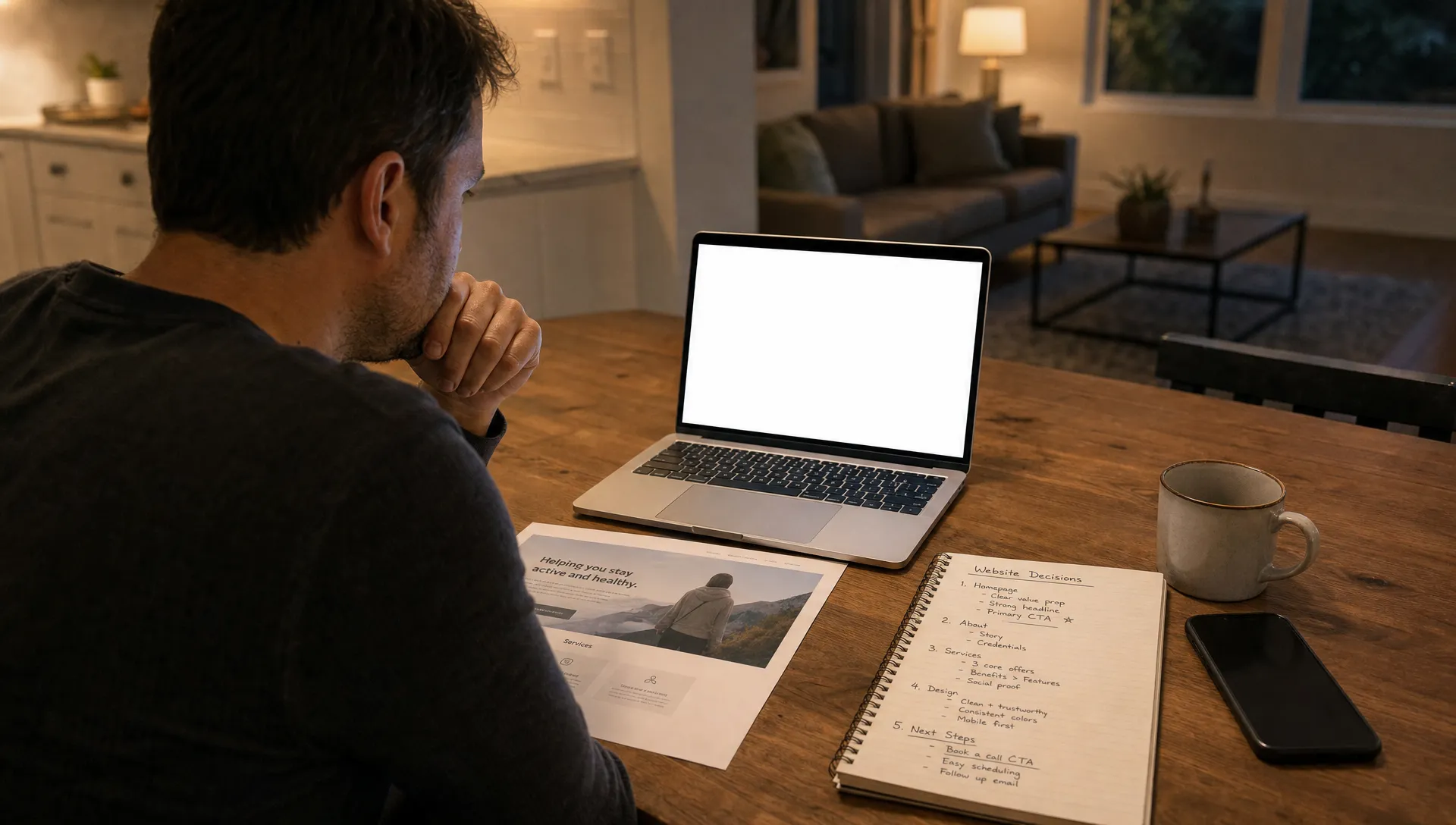
If your internal brief says only 'I need a website,' you are not ready to compare platforms, request prices or pick templates. You are ready to make one clear business decision: what should the website do for the company?
The wrong first step creates rework. Teams choose a tool too early, design pages without a message or ask agencies for quotes before the scope is clear. This guide gives founders, CEOs, CMOs and marketing managers a practical way to decide what to do next.
A website starts with a business job, not a software choice.
A business website is a managed channel that helps the right audience understand your offer, trust your company and take a useful next action. That action might be booking a call, requesting a quote, signing up, reading product content or validating credibility before a sales conversation.
Before you ask whether you need Webflow, Framer, WordPress, Shopify or a custom build, define the outcome. A platform can support the strategy, but it cannot replace it.
Website strategy is the set of decisions that connects audience, offer, pages, content, platform and maintenance to a measurable goal. If those decisions are missing, the project becomes subjective. Everyone comments on colors, but nobody knows whether the site will help the business.
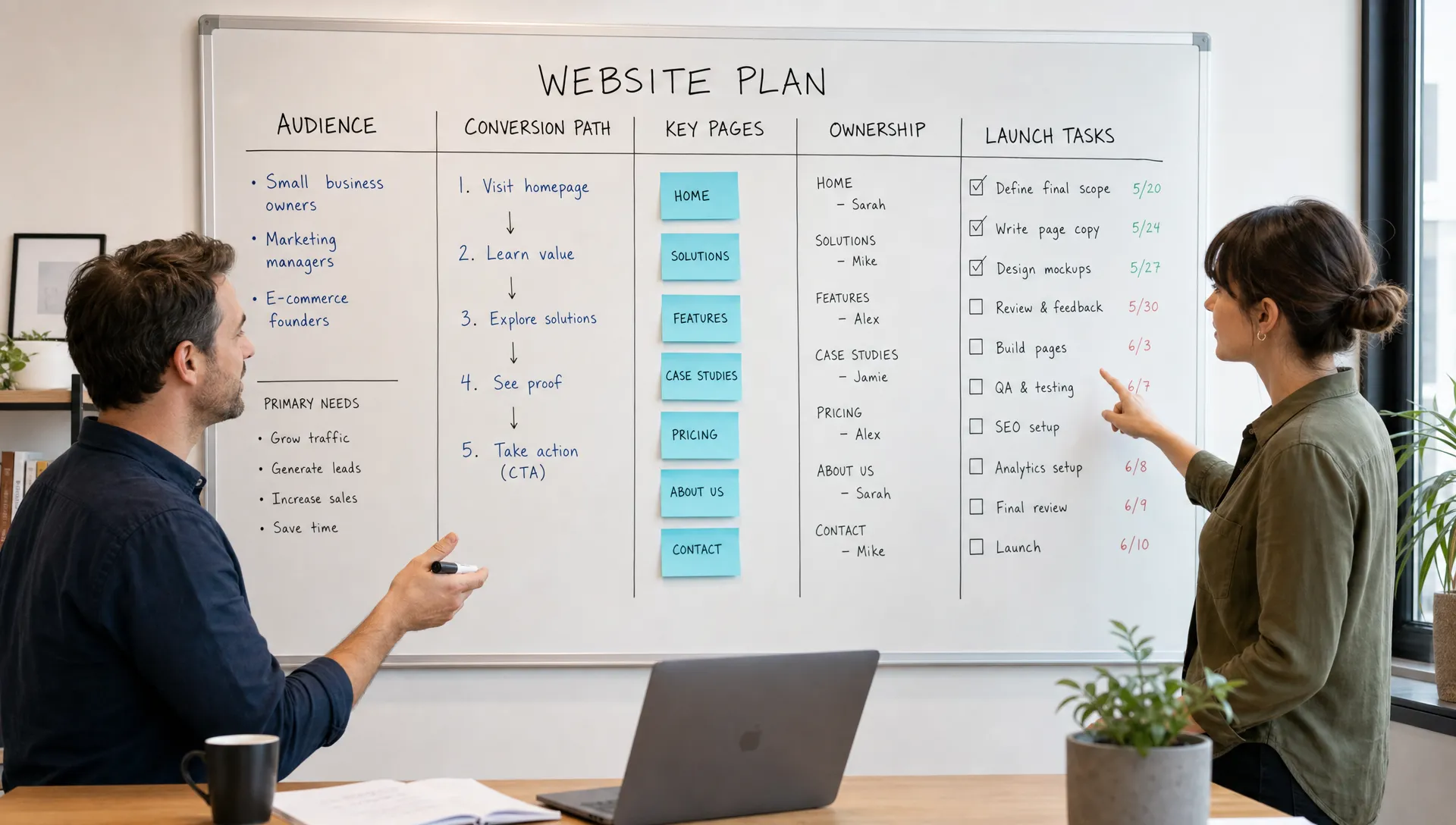
Use this framework before you speak with a designer, developer or agency.
This framework keeps the first step concrete. Instead of saying you need a website, you can say you need a five-page marketing site for a B2B service company, built to generate qualified consultation requests and managed by the marketing team after launch.
That level of clarity changes the conversation. It makes pricing easier to compare, helps designers make better choices and reduces the risk of building a site that looks fine but does not support sales.
The right route depends on urgency, risk, internal skills and the role the website plays in your growth.
A template can work when the website is mainly for validation, a simple event, a personal brand or a very early business with limited traffic expectations. The tradeoff is that messaging, SEO setup, page structure and design consistency still require judgment.
Choose this route if speed and cost matter more than differentiation. Avoid it if the site will support paid acquisition, sales credibility or a complex offer. If you are unsure which builder or no-code tool fits, use our guide on how to select the right no-code tools before you commit to one.
AI can help generate page outlines, first-pass copy and structure options. It is useful when you need to move from a blank page to a rough direction.
Do not treat an AI-generated site as a finished business asset without reviewing positioning, content accuracy, conversion logic, accessibility, SEO fundamentals and brand fit. AI can accelerate preparation, but you still need human decisions.
A freelancer can be a good fit when the scope is clear and you need one primary skill, such as design, Webflow development, copywriting or technical SEO. This route works well when you can manage the project internally.
The risk is fragmentation. If nobody owns the strategy, you may end up coordinating several specialists without one person responsible for the final result.
An agency is usually more appropriate when the website has multiple moving parts: messaging, design, development, CMS, SEO setup, integrations and launch support. It also helps when the internal team needs a structured process rather than individual execution only.
If you are evaluating partners, use a process that helps you choose a web design agency that fits your growth stage, not just one with a portfolio style you like.
Each route trades speed, cost, risk and ownership differently. The table below summarizes what to expect before you commit to one, so the choice matches the outcome you defined in the framework above rather than habit or budget alone.
| Route | Best for | Typical timeline | Main risk | Who owns it after launch |
|---|---|---|---|---|
| Template or DIY builder | Validation, events, personal brand | Days to a few weeks | Weak messaging, SEO and structure | Founder or a single internal owner |
| AI-assisted first draft | Getting unstuck from a blank page | Hours to a few days | Shipping it unreviewed as a finished site | Whoever reviews and finishes the draft |
| Freelancer or specialist | A clear, single-skill scope | Two to six weeks | Fragmentation across specialists | Internal project owner |
| Agency or studio | Multi-part projects needing a structured process | Four to twelve weeks | Higher cost if scope is undefined | Agency at launch, then handed to the internal team |
The route you choose is independent from the platform you end up on. If you already know the project will run on Webflow, our beginner guide to getting started with Webflow explains what to expect before you brief a freelancer or an agency on it.
A first website should be simple, but not incomplete.
The goal is not to publish every possible page. The goal is to build the smallest credible version that can support the business, be maintained properly and scale without needing to be rebuilt immediately.
Your homepage should explain who you help, what you offer and why it matters without making the visitor work too hard. The first screen should not be clever at the expense of clarity.
For service businesses, this usually means a direct value proposition, proof points, a short explanation of your process and a clear call to action. For SaaS or product-led companies, it may also include use cases, product screens, integrations and pricing logic.
Most first business websites need a homepage, offer or service pages, an about or company page, proof elements, contact or conversion pages and legal pages. Content-heavy companies may also need a CMS for articles, resources or case studies. If a CMS is part of the plan, comparing options early avoids a rebuild later. Our overview of the best CMS options for website creation can help you decide what your content team actually needs.
For a broader view of the core building blocks, use our guide on what a professional website for business should include.
The pages you need also depend on your business model. The table below gives a starting point for the three most common first-website profiles, so you scope pages against your own situation instead of a generic template list.
| Business profile | Core pages for version one | CMS needed |
|---|---|---|
| Service business | Homepage, service pages, about, proof, contact, legal pages | Optional, useful for case studies |
| SaaS or product-led company | Homepage, product or use case pages, pricing, integrations, contact | Recommended for changelog or integrations |
| Content-heavy company | Homepage, resource hub, article template, about, contact | Required for articles and resources |
A site should launch with clean page titles, meta descriptions, structured headings, readable URLs, image alt text, responsive layouts and analytics. These are not advanced extras. They are part of a usable foundation. Our complete guide to SEO on Webflow covers the setup in more depth once your page structure is decided.
Google Search Central's SEO starter guide explains the importance of clear navigation, helpful content and making pages accessible to search engines. You do not need an overbuilt SEO strategy on day one, but you do need a site that can be crawled, understood and measured.
Use the checklist below as the minimum bar before launch. None of these items require an agency, but skipping them creates work later that is harder to fix once pages, links and rankings already exist.
| Foundation item | Why it matters |
|---|---|
| Unique page titles and meta descriptions | Helps search engines and visitors understand each page before they click |
| Structured headings (H1 to H3) | Gives pages a clear hierarchy for readers and crawlers |
| Readable, stable URLs | Avoids broken links and rework after the first version |
| Descriptive image alt text | Supports accessibility and image search visibility |
| Responsive layouts | Most first-time visitors will land on mobile |
| Analytics and goal tracking | Without it you cannot tell if the site supports the business outcome |
Most website problems start before design begins.
References are useful, but they are not a brief. A website can look polished and still fail because the offer is unclear, the page hierarchy is weak or the calls to action do not match buyer intent.
Use inspiration to define taste and direction, not strategy. First decide what the site must communicate, then decide how it should look.
If you ask three providers for a price without a clear scope, you will not receive comparable proposals. One may include copywriting, SEO setup and CMS structure. Another may include only design and development. Our guide on how to compare web design packages beyond the page count walks through what to line up before you ask.
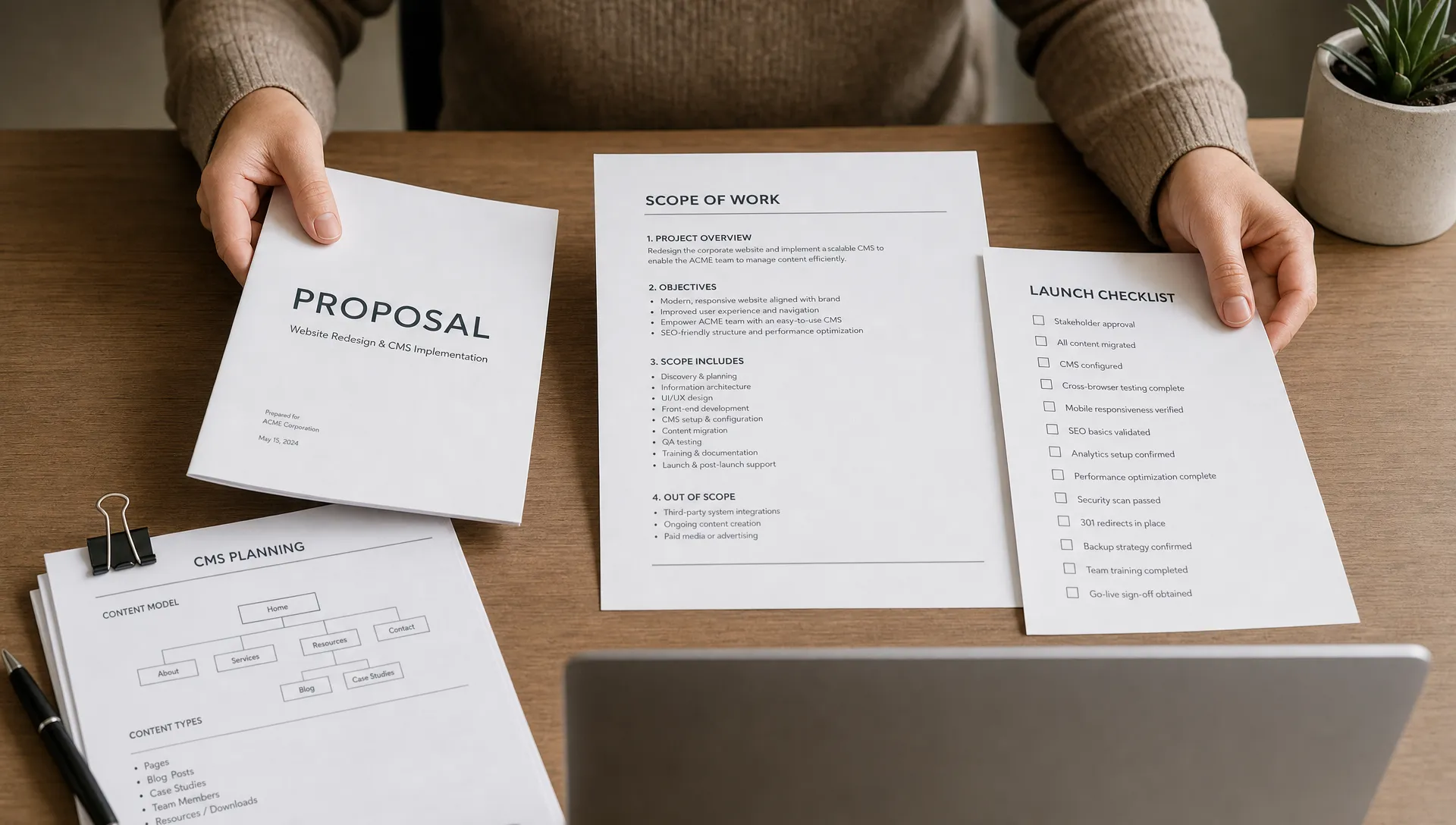
Before comparing costs, define pages, content responsibilities, revision process, CMS needs, integrations, SEO expectations and launch support.
More pages do not automatically create more clarity. Early websites often become weaker when teams add pages for every internal idea.
Start with the pages that support the main visitor journey. Add content later when you have a publishing plan, search intent, internal ownership and a reason for each page to exist.
A website is not finished at launch. Someone needs to update content, fix small issues, review performance, publish new assets and keep the site aligned with the business.
If the site depends on developers for every small edit, marketing execution slows down. Choose a setup that matches the team that will actually manage it.
Use this checklist to turn the statement 'I need a website' into a usable brief. Each item exists to prevent one specific type of rework later, so treat a blank row as an open question rather than a detail to skip.
| # | Action | Why it matters |
|---|---|---|
| 1 | Write the primary business outcome for the website in one sentence | Gives every later decision a test to pass |
| 2 | Define the main audience and what they need before taking action | Prevents generic messaging that speaks to nobody |
| 3 | Choose one primary call to action and one secondary call to action | Keeps every page focused on one useful next step |
| 4 | List the pages needed for version one | Stops scope from growing during design |
| 5 | Decide which pages require CMS management | Avoids rebuilding static pages later |
| 6 | Gather existing brand assets, copy, product information and proof points | Removes the biggest source of launch delays |
| 7 | Identify required integrations, such as forms, CRM, scheduling, analytics or newsletter tools | Prevents late technical surprises |
| 8 | Define who will approve strategy, copy, design and launch | Avoids review loops with no clear decision maker |
| 9 | Set a realistic deadline based on content readiness, not only development speed | Keeps the timeline honest about the real bottleneck |
| 10 | Decide who will maintain the site after launch | Ensures the site stays accurate past launch day |
This checklist does not need to be perfect before you contact a partner. It only needs to be clear enough to avoid vague discussions and mismatched expectations.
Before publication, run the project through a website launch checklist so technical, content and conversion details are not missed at the end.
Your next action depends on how much clarity you already have.
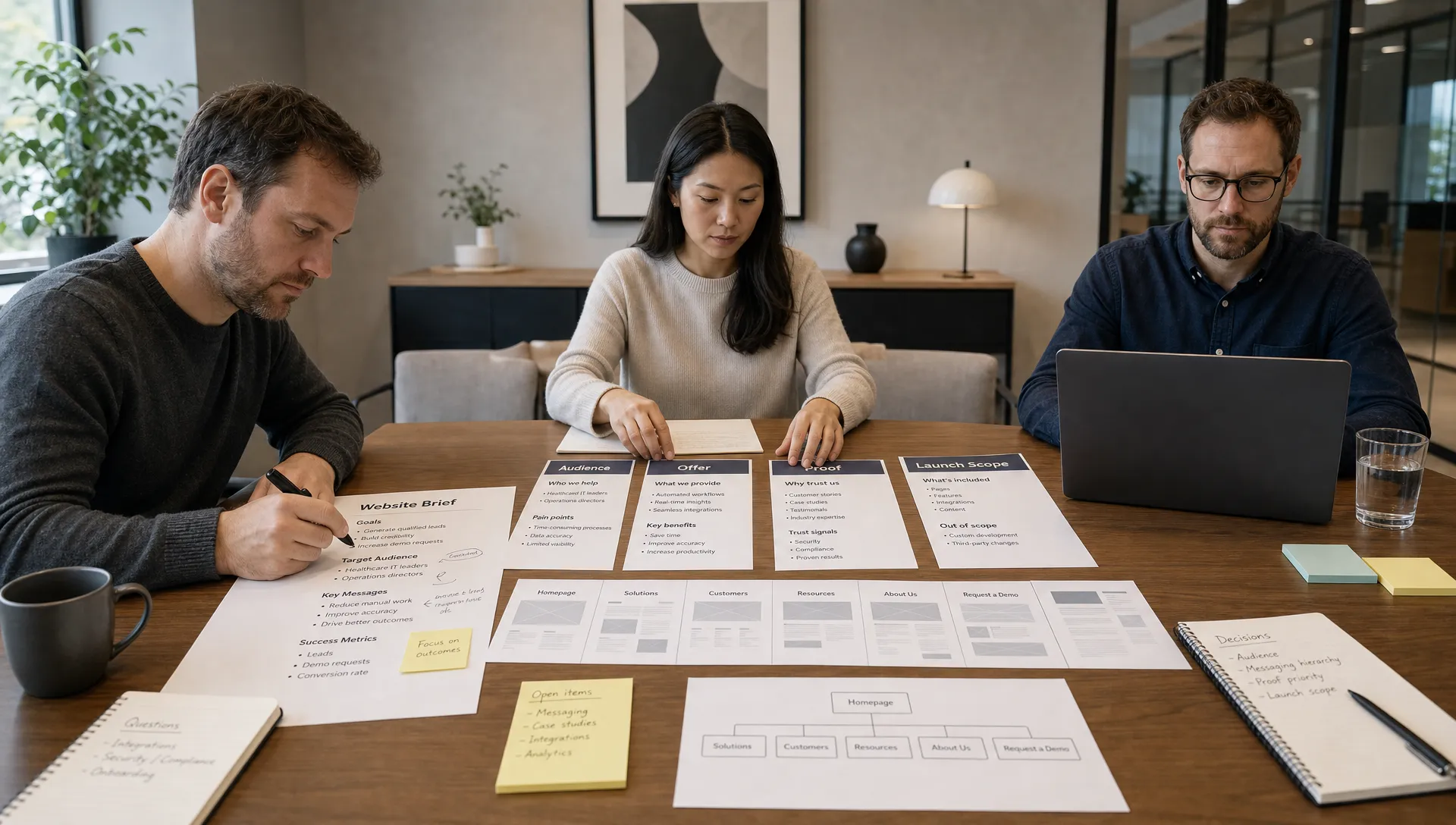
If the offer, audience and pages are unclear, start with strategy and content structure. Do not open a design tool yet. A short workshop or internal planning session will save more time than browsing templates.
If the strategy is clear but the brand is weak, start with messaging and visual direction. The website will need enough identity to feel coherent across pages, forms, email signatures, sales material and social proof.
If the scope is clear and the business needs a polished marketing site quickly, start comparing execution partners. Look for evidence that they can handle design, development, CMS structure, SEO setup and handover, not just page visuals.
If you already have a live site that underperforms, the first step is not a new homepage concept. It is a review of traffic, conversion paths, page speed, content gaps, lead quality and internal maintenance issues. Our guide on how to plan a website revamp around business outcomes covers that review before you commit to a rebuild.
What should I do first if I need a website? Start by defining the business outcome, target audience, conversion path and first version scope. Do this before choosing a platform or asking for design concepts.
Should I build my first website myself or hire someone? Build it yourself if the site is low risk, simple and mainly for validation. Hire help if the website must support sales, marketing campaigns, credibility or ongoing content management.
How many pages does a first business website need? It depends on the offer, but most first business websites need a homepage, core offer pages, proof or company information, a contact or conversion page and legal pages.
Should I choose Webflow, Framer, WordPress or Shopify first? Choose the platform after you understand the website's job. Webflow and Framer often suit marketing sites, WordPress can suit content-heavy setups and Shopify is built for commerce.
What should I prepare before contacting an agency? Prepare your business goal, audience, page list, brand assets, content status, required integrations, timeline, decision makers and maintenance expectations.
How long does a first website project take? A focused website can move quickly when scope, content and approvals are ready. Timelines become longer when messaging, brand direction or internal decision making are unclear.
If you need a website, do not start by choosing a template or collecting random quotes. Start by defining the job the website must do, then choose the route that fits your scope, team and growth stage.
Your next step is to write a one-page website brief using the framework above. If you want a structured partner for strategy, Webflow or Framer execution and launch support, BeBranded can help you turn that brief into a clear build plan.