Which website design services are worth paying for?
Development
•
X min
•
Published on
17.09.2026
•
Updated on
12.10.2026

Buying website designing services is difficult because many proposals sound similar, but the value behind them can be very different. This guide helps CEOs, CMOs, marketing managers and founders decide what is worth paying for, what to question and how to scope a website project around business outcomes instead of deliverable volume.
A good website budget should buy clarity, execution quality and long-term control. It should not pay for decoration without strategy, page count without purpose or technical work your team cannot maintain.
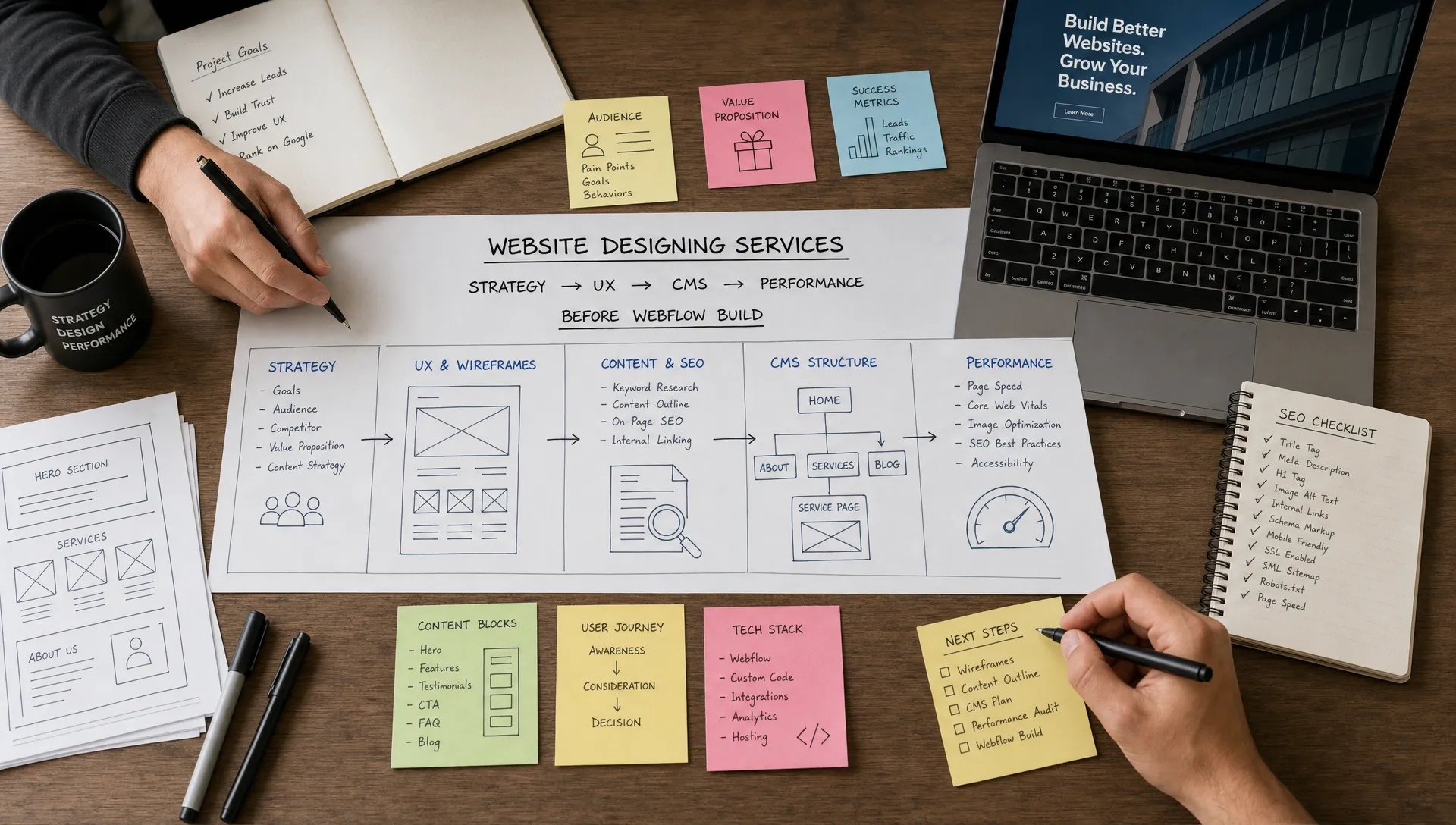
Website design services cover the strategic, creative and technical work needed to plan, design, build, launch and improve a website.
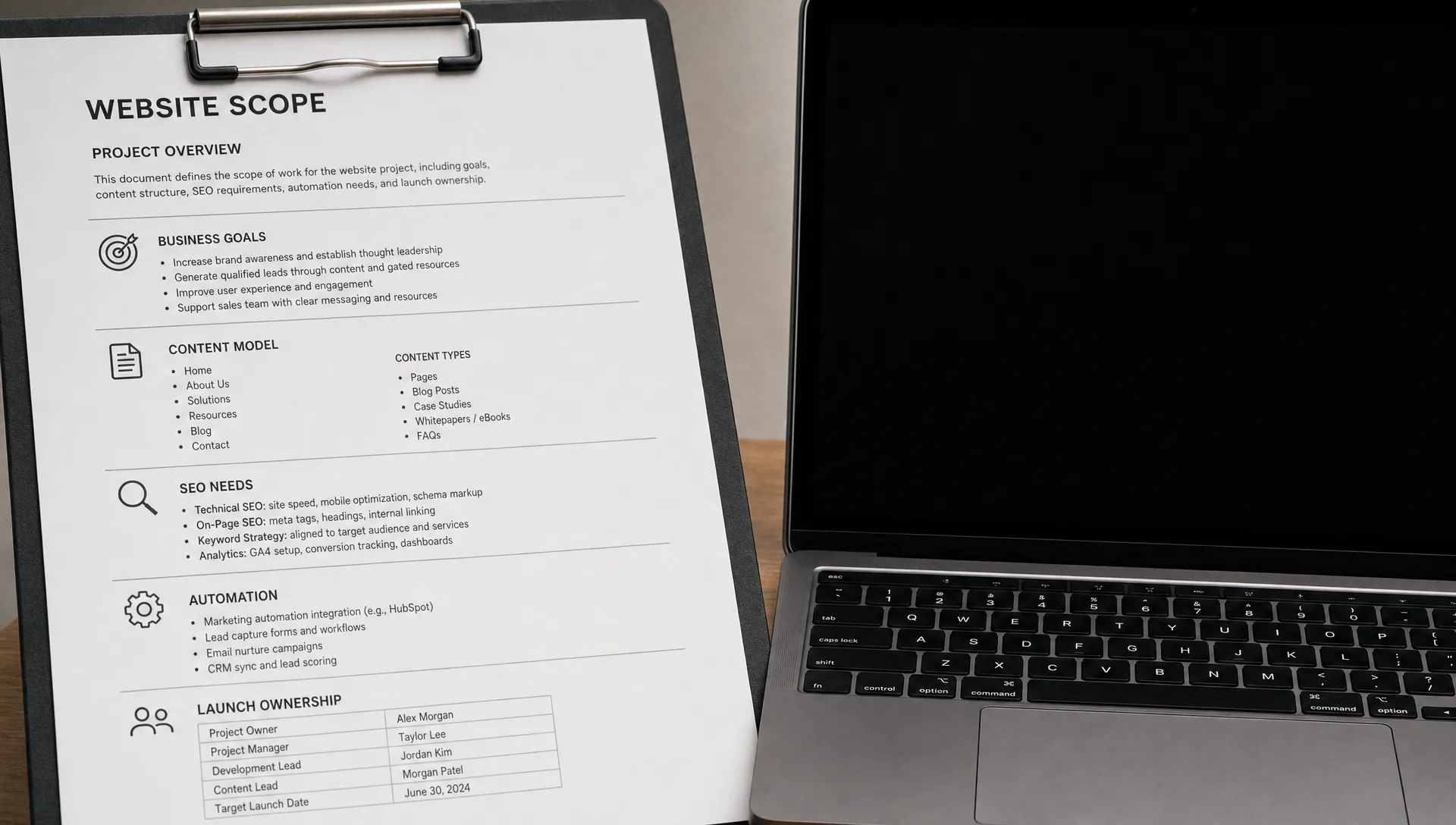
That usually includes discovery, positioning, site structure, UX design, visual design, development, CMS setup, SEO setup, responsive QA, analytics and launch support. Some providers include copywriting, automation, brand identity and ongoing maintenance. Others sell only design files or a fixed number of pages.
Good website designing services turn your website into a usable sales and marketing asset. The scope should explain how the work will support lead generation, product education, hiring, sales enablement or another clear objective.
If you need a baseline for what a serious scope should cover, BeBranded has a separate guide on what website development and design services should include.
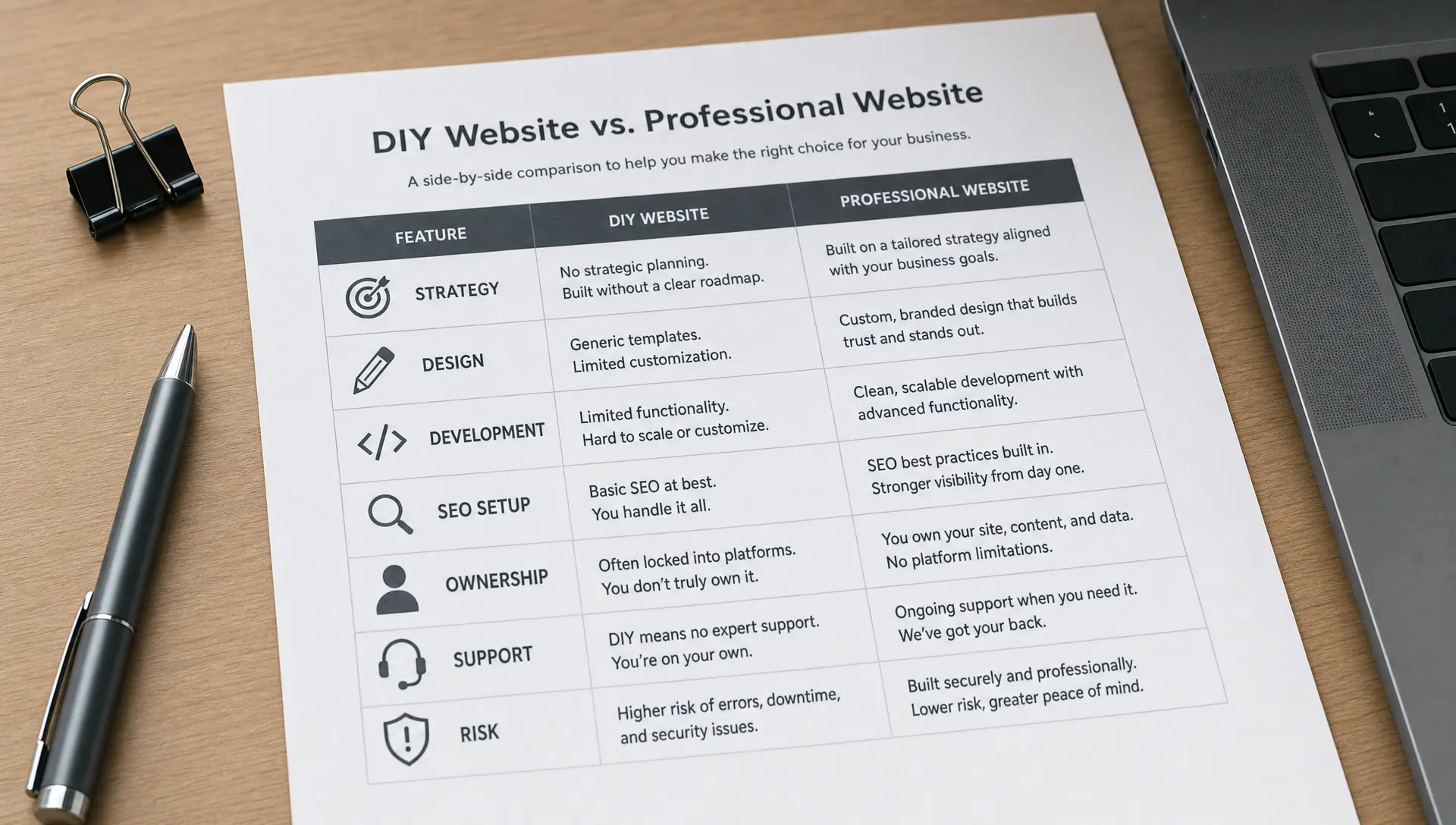
Before approving a proposal, run each service through a simple decision framework.
This framework keeps the conversation away from subjective taste. It forces each line item to earn its place in the project.
That is why website designing services should be evaluated as connected decisions, not as isolated design tasks. A new visual direction has little value if the content model is weak. A beautiful homepage will underperform if the forms, page speed or messaging are neglected.
The services below tend to create the most leverage because they affect how visitors understand, trust and use your website.
Strategy is worth paying for when your offer is complex, your audience has multiple decision-makers or your current website fails to explain why buyers should choose you.
This work should define your audiences, conversion goals, core messages, page priorities and proof points. It should also clarify what the website should not do, because trying to serve every audience equally often creates a vague site.
To see how this translates into page structure, read how to design a website around the decisions buyers need to make.
Information architecture decides what pages exist, how they connect and how users move from first visit to action.
This is worth paying for because structure affects both conversion and organic search. A clear sitemap, navigation model and page hierarchy help visitors find answers quickly. They also help search engines understand the role of each page.
In practical terms, website designing services should include UX thinking before visual design starts. Wireframes, user flows and content hierarchy reduce guesswork before the build begins.
Copy is not just text inserted after design. It shapes the argument your website makes.
For B2B companies, founders and marketing teams, strong copy clarifies the offer, handles objections and guides visitors toward the next step. It should be based on buyer questions, sales conversations, search intent and product reality.
If conversion and organic visibility are the priority, this breakdown of web design services that improve conversion and SEO explains how these disciplines should work together.
Development is worth paying for when the website needs to be fast, responsive, editable and easy to scale.
For Webflow and Framer projects, the quality of the build matters as much as the visual design. Clean class naming, reusable components, CMS structure, responsive behavior and basic documentation all affect whether your team can use the site without creating technical debt.
Ask the provider how components, breakpoints and CMS templates will be documented. A short handover session or style guide is often worth more than extra pages.
Technical SEO is worth paying for because a website can look finished and still be hard to crawl, index or understand.
A proper setup should cover metadata, heading structure, redirects, sitemap configuration, schema where relevant, image optimization, canonical logic and performance basics. Google's Search Essentials are a useful reference for understanding the fundamentals that every public website should respect.
If your site runs on Webflow, the complete guide to Webflow SEO shows how these checks apply in practice.
CMS architecture is worth paying for when your team publishes content, manages resources, runs landing pages or updates case studies.
The goal is not just to create collections. The goal is to design a content system that fits how marketing actually works. Fields should be clear, reusable and difficult to misuse. Templates should keep pages consistent without blocking useful variation.
For a deeper look at collections, fields and templates, see the complete guide to the Webflow CMS.
Maintenance is worth paying for when the website is part of your daily marketing operations and a broken form or slow page has a direct cost.
A useful support plan defines response times, the type of requests covered, who approves changes and how urgent fixes are handled. It should also say what happens to backups, integration updates and performance monitoring. For a broader view of what to expect, read the complete guide to website maintenance.
The table below summarizes when each service earns its place and what to check in a proposal. Use it as a first filter before you read the detailed scope. If a line item does not match a real constraint in your marketing or sales process, question it.
| Service | Worth paying for when | Watch out for |
|---|---|---|
| Strategy and positioning | Your offer, market or audience is not clearly reflected on the current site | Workshops that produce vague statements without page-level decisions |
| UX and information architecture | Users struggle to find information or your site structure has grown messy | Sitemaps based only on internal departments instead of buyer journeys |
| Conversion copy | Your website needs to explain value, reduce objections and drive action | Generic copy that sounds polished but says nothing specific |
| Webflow or Framer development | Your team needs a fast, editable and responsive marketing site | Builds that look good but are hard to maintain after launch |
| Technical SEO setup | Organic visibility matters or you are migrating from an existing website | SEO treated as metadata only, without structure, redirects or performance work |
| Maintenance and support | Your team needs ongoing updates, fixes or structured improvement cycles | Vague retainers with no response rules, scope limits or ownership model |
Some services are useful in the right context, but poor investments when bought too early or for the wrong reason.
Multiple visual concepts can be helpful for a new brand identity. For a conversion-focused website, they often slow the project down if strategy and page structure are unresolved.
Advanced animation is worth considering only after the core experience works. Motion should guide attention, explain something or add polish without hurting load time or usability. Google's Core Web Vitals framework is a reminder that user experience includes loading, interactivity and visual stability, not only visual style.
A full brand system may be unnecessary if the immediate need is a better acquisition website. In that case, a focused visual refresh, clearer messaging and a stronger CMS may create more value than a large identity project.
Not all website designing services deserve equal priority. The right question is not whether a service is good in general. The right question is whether it removes a current constraint in your marketing or sales process.
The table below compares the services most often bought too early with the conditions that make them a sound investment. The pattern is consistent: a service becomes worth the budget once the foundations it depends on are in place, not before. Use it to decide what belongs in the first phase and what can be scheduled for a later release.
| Service | Buy now when | Wait when |
|---|---|---|
| Multiple visual concepts | You are launching a new brand identity and need to compare directions | Strategy and page structure are still undecided |
| Advanced animation | The core experience already loads fast and converts | Motion would delay loading or hide key messages |
| Full brand system | The brand itself is changing or inconsistent across channels | The immediate need is a better acquisition website |
| Custom illustration or video | The content supports a clear message or proof point | It would replace missing messaging instead of supporting it |
| Extra page templates | Your team will publish at that volume soon | Page count is the only reason they were added |
Most wasted budget comes from unclear priorities, not from one bad design choice.
If proposals are being compared mainly by the number of pages, use this guide to compare web design packages beyond the page count before making a decision. To see how packages are priced, read website package pricing and what to compare before you buy.
The right scope depends on company maturity, team capacity and how much the website supports revenue.
An early-stage founder may need a focused website that explains the offer and captures qualified leads. A scaling company may need a CMS, migration plan, SEO structure, integrations, analytics and a design system that supports multiple campaigns.
Website designing services become more valuable as the website becomes part of daily marketing operations. If several people publish content, run campaigns or use the site in sales conversations, the build needs more structure and documentation.
For small teams, the right scope is usually not the largest one. It is the scope your team can launch, maintain and improve without depending on an agency for every minor change.
The table below gives a practical starting point by company stage. It shows which services usually come first, what can wait and where the main risk sits. Adjust it to your own team capacity, because the best scope is the one you can maintain after launch.
| Stage | Priority services | Can wait | Main risk |
|---|---|---|---|
| Early-stage founder | Positioning, short sitemap, conversion copy, responsive build, basic SEO | Advanced animation, large brand system | Trying to speak to every audience at once |
| Growing company | CMS architecture, SEO structure, analytics, reusable components | Custom illustration, multiple concept rounds | A site that depends on the agency for every edit |
| Scaling team | Design system, migration plan, integrations, governance, support plan | Visual experiments that do not support campaigns | Inconsistent pages across several publishers |
A proposal is easier to judge when you compare the same elements across every quote.
Look at how each provider describes scope, responsibilities, timeline and support. Specific wording usually signals a team that has thought through the project. Generic wording often hides assumptions that surface later as change requests.
The table below shows what a weak and a strong version of each element tends to look like. It is not a scoring system, but it helps you spot where to ask for clarification.
| Proposal element | Weak signal | Strong signal |
|---|---|---|
| Scope | A page count with no template or CMS detail | Named page types, templates and CMS collections |
| Content | Copy and images assumed to be provided | Clear split between provider and client responsibilities |
| SEO | A single generic line about SEO | Metadata, redirects, sitemap and performance listed |
| Ownership | Workspace owner not mentioned | Workspace, domain and handover documented |
| Support | Support mentioned without limits | Response times, covered requests and approval rules |
| Timeline | One launch date and nothing else | Milestones with client review dates |
Use this checklist to review any website proposal before you approve it.
Before you buy website designing services, make sure the proposal explains decisions, dependencies and ownership. A clear scope protects both your budget and the quality of the final website.
Are website designing services worth it for a small business? Yes, if the service helps clarify the offer, improve trust, generate leads or make the website easier to manage. A small business usually does not need a large scope, but it does need clear messaging, responsive design and reliable execution.
What should I pay for first if my budget is limited? Start with strategy, site structure, conversion-focused copy, responsive development and basic SEO setup. These services affect the foundation of the website. Visual polish and advanced motion can come later.
Is custom design always better than using a template? Not always. A template can work for a simple early website if the structure fits your offer. Custom design is worth paying for when your positioning, buyer journey, content model or brand requirements are specific.
Should SEO be included in website design services? Yes, at least at a technical and on-page level. Metadata, headings, redirects, crawlability, internal linking, image optimization and performance should be considered during the project, not added after launch.
How do I know if a proposal is too vague? A vague proposal lists deliverables without explaining scope, responsibilities, exclusions or success criteria. If you cannot tell what will be built, who provides content and what happens after launch, ask for clarification before signing.
The website designing services worth paying for are the ones that reduce business risk, improve usability and give your team a website it can operate with confidence.
Start by defining the outcome you need from the website, then remove every service that does not support that outcome. If you are planning a Webflow or Framer project and want a clear scope before investing, review how BeBranded approaches custom website projects.