How to easily create circular text on your Webflow site

How to easily create circular text on your Webflow site

How to easily create circular text on your Webflow site
Share this Article

Summarize this article with AI

When it comes time to make animations with circular text, we always wonder how to do it... If you use Figma, you'll be delighted to know that it's perfectly possible to create circular text easily! In this article, we're going to show you how to use the Figma "Arc" extension to create circular text, then integrate it into your Webflow site. We'll also cover an alternative method with SVG for text that stays editable, and how to animate the result.

How to use the "Arc" extension on Figma

Go to the "Arc" extension page and add it to your Figma. Then select your text, choose the radius of your circle and adjust the arc to get the shape you want. You can play around with the different parameters to get the perfect design!
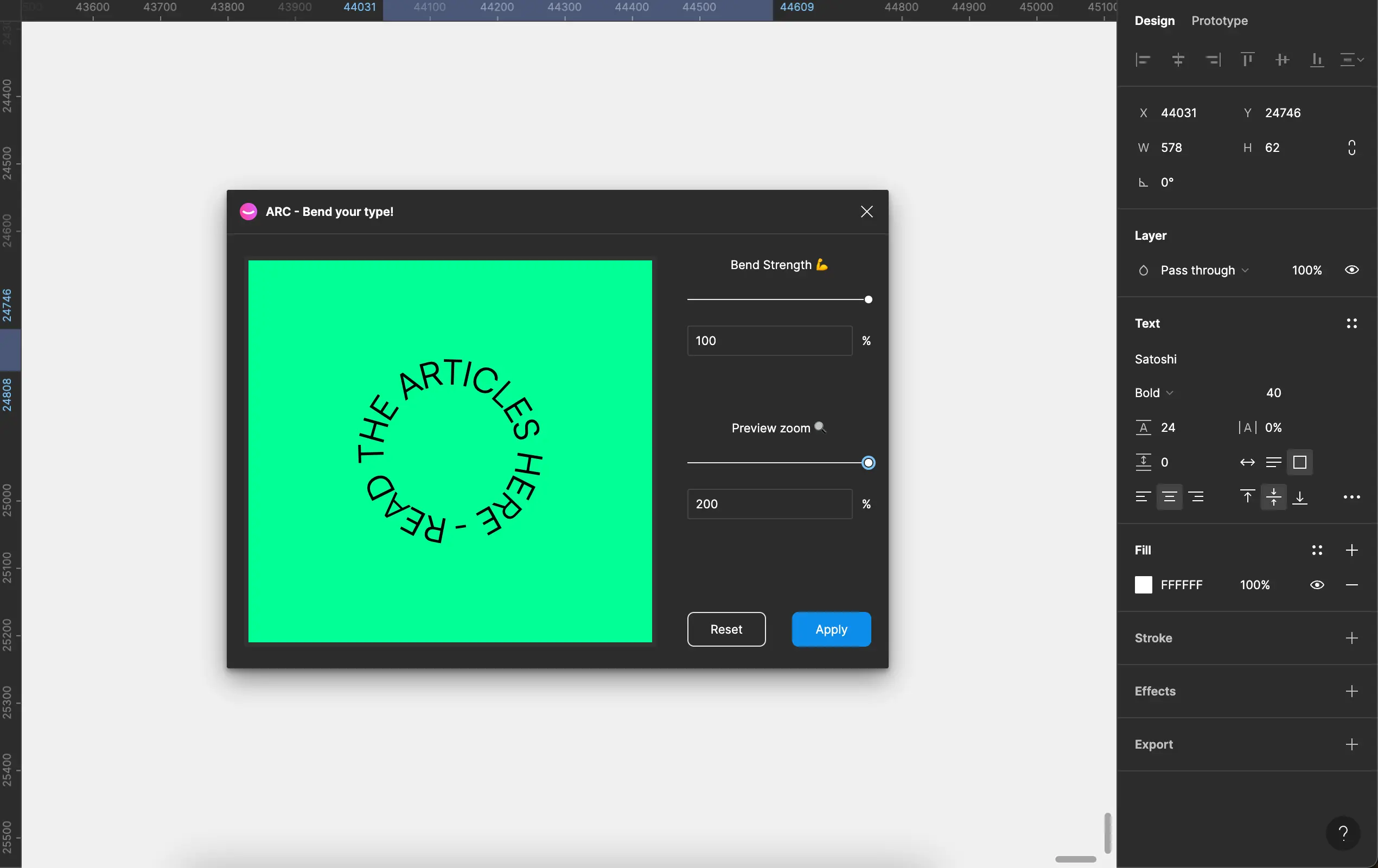
Now all you have to do is export your design in PNG or SVG format for better quality and faster loading, then integrate it into your Webflow site. Prefer SVG when possible: it stays sharp at any size and usually weighs less. If you export a PNG, compress it before upload (our free Image to WebP converter does this in seconds).

Alternative: real circular text with SVG textPath

The Figma method exports an image, which means the text is no longer real text: you cannot edit it without going back to Figma, and screen readers and search engines cannot read it. If you want circular text that stays editable, there is a native web solution: an SVG with a textPath element.

The principle is simple. You define an invisible circular path inside an SVG, then attach your text to that path. The browser wraps the characters along the circle automatically. In Webflow, you add this through an Embed element: an SVG tag containing a circular path (with an id), and a text element whose textPath attribute references that path. Adjust the circle's radius to control the curve, and the font-size and letter-spacing in CSS to fine-tune the look.

The advantages of this approach: the text remains selectable and readable by search engines, you can change the wording in seconds without re-exporting anything, and the file weighs almost nothing. The trade-off is that it requires a small amount of code, where the Figma method is entirely visual.

Animate your circular text

Circular text really comes alive when it rotates. Two simple options in Webflow:

  1. Webflow interactions: add a rotation animation (0 to 360 degrees, linear easing, looping) on the image or the embed. This takes a few minutes and requires no code.
  2. GSAP: for finer control (rotation speed linked to scroll, pause on hover, reversed direction), a few lines of GSAP do the job. Our complete GSAP guide covers how to set it up in Webflow.

A classic pattern is the rotating circular badge ("scroll down", "open for projects") placed in a corner of the hero section, often with a logo or an arrow in the center.

A few tips for better integration

  • Make sure that the text remains legible and aesthetically pleasing.
  • Use circular text sparingly so as not to overload your design.
  • Think about accessibility: circular text can be difficult to read for some users, so use it for non-critical elements. If you use the image method, always fill in the alt attribute with the text content.
  • Keep rotation slow (a full turn in 10 to 20 seconds is usually enough) and respect the "prefers-reduced-motion" preference for users who disable animations.

Conclusion

Adding circular text to your Webflow site can really set it apart and grab the attention of your visitors. Using the Arc extension this process is super easy to get to grips with, allowing you to create unique text designs with ease. And when you need the text to stay editable or animated, the SVG textPath method and a small rotation animation take the same idea further. If you want this kind of detail handled by specialists on your next project, our Webflow agency is happy to help.


Related Guide
Get the Guide
How to easily create circular text on your Webflow site

FAQ

It depends on the method. If you export an image from Figma, the text is invisible to search engines, so use it only for decorative elements and fill in the alt attribute. If you use the SVG textPath method, the text remains real text that search engines and screen readers can read.
SVG whenever possible. It stays perfectly sharp at any screen size, usually weighs less than a PNG, and scales without quality loss. PNG only makes sense if your design includes effects that SVG export does not preserve. In that case, compress the PNG before uploading it to Webflow.
The simplest way is a Webflow interaction: a looping rotation animation from 0 to 360 degrees with linear easing on the image or embed. For finer control (scroll-linked speed, pause on hover), use GSAP through custom code. Keep the rotation slow, around one full turn every 10 to 20 seconds.
Yes. The SVG textPath method works directly in Webflow through an Embed element: you define a circular path in an SVG and attach your text to it. No design tool is needed, the text stays editable, and the file weighs almost nothing. It requires a small snippet of code, but the result is more flexible than an exported image.
Curved text is harder to read than straight text, so reserve it for decorative or secondary elements, never for essential information. If you use an image, provide the text in the alt attribute. If the element rotates, keep the speed low and respect the prefers-reduced-motion setting for users who disable animations.
The most common pattern is a rotating badge in a hero section ("scroll down", "open for projects", a brand tagline around a logo). It also appears in stamps, labels, loaders, and portfolio headers. It is a decorative accent that adds personality to a design when used sparingly.

Ready to boost your conversions?

Our team is here to understand your needs & work with you to create your next projects.
Get news, infos and resources.
Actionable tips delivered straight to your inbox.
Thank you! Your submission has been received!
Oops! Something went wrong while submitting the form.